Chaos' dance, life's code: From disorder to AI
The ballet of randomness
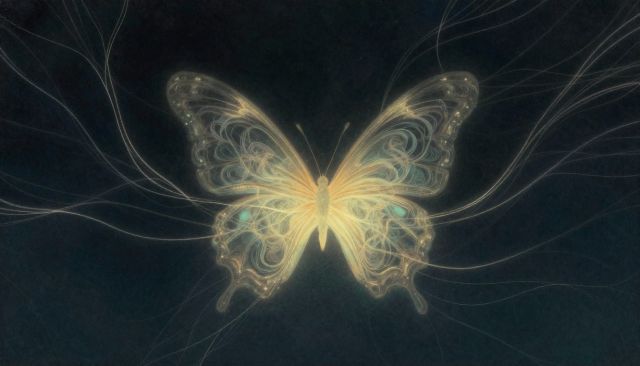
Imagine a universe where the slightest disturbance can trigger a cascade of unpredictable events. This isn't a scene from a science fiction novel, but the heart of chaotic systems science. From weather patterns that shift with the flap of a butterfly's wings to stock prices that leap and bound like popcorn in a pan, these systems are everywhere. They are characterised by a sensitivity to initial conditions – the so-called butterfly effect – which makes long-term predictions an almost impossible task. On the surface, they appear random, but beneath lies a hidden order, a complex dynamic that scientists have spent decades mapping.
These systems challenge our intuitive understanding of cause and effect. While classical physics often describes the world as a giant, predictable machine, chaos theory shows that even deterministic systems can behave in ways that seem utterly chaotic. Consider a multi-pendulum setup. Even though their movements are governed by physical laws, the slightest inaccuracy in their starting positions will quickly lead to radically different and unpredictable paths for the pendulums over time.
The study of chaotic systems has not only revolutionised our understanding of natural phenomena but has also laid the groundwork for new methods in computer science and artificial intelligence. The ability to model and understand systems that are inherently unpredictable is crucial for tackling complex challenges, from simulating biological processes to developing more robust algorithms. It's like finding a hidden algorithm in the very fabric of the universe's patterns – a thought that might resonate with those fascinated by how "The universe's compression algorithm: entropy's secret" seems to shape our reality.
From order to evolution: The birth of the algorithm
How can something as chaotic as nature, with its seemingly arbitrary events and unpredictable developments, lead to the intricate order we see in life? The answer lies in a process deeply embedded in nature itself: evolution. But evolution isn't just about random mutations; it's a process that, over time, selects for the most viable traits. This is a form of natural "optimisation," where "errors" (mutations) that prove beneficial are preserved and amplified.
Inspired by this biological process, scientists developed artificial evolutionary algorithms. These algorithms mimic the natural selection process in a digital environment. They start with a population of potential solutions to a problem, which are then "mated" (combined) and "mutated" (randomly altered). The "fittest" – those solutions that perform best according to given criteria – survive and form the basis for the next generation. Over many generations, these algorithms can find surprisingly effective solutions to problems too complex for traditional methods.
This approach is particularly powerful in design and optimisation. Imagine designing an antenna that's as efficient as possible, or a network of roads that minimises travel time for everyone. Instead of trying to calculate all possible combinations manually, the evolutionary algorithm is allowed to "explore" the solution space. It's a process that is both resource-intensive and time-consuming, but the result can be groundbreaking innovations that we might never have conceived through pure human logic. It's like letting the universe itself find the optimal configuration, within the framework of our digital laws.
Genetic algorithms and artificial life
One of the most fascinating areas within artificial evolution is the development of genetic algorithms. These algorithms use a set of "genes" – often represented as binary strings or other data structures – to describe a potential solution. These genes act as a "DNA code" that dictates the characteristics of an organism or a solution.
The process begins with a randomly generated population of these "genomes." Each genome is then evaluated based on a "fitness function," which quantifies how well the represented solution meets the objectives. Genes that yield higher fitness have a greater chance of being selected for reproduction. Through mechanisms like "crossover" (exchanging genetic material between parents) and "mutation" (random changes in genes), new generations are created that gradually become better adapted to the problem.
The applications are far-reaching. Genetic algorithms are used for everything from planning delivery truck routes to designing new medicines. They can even be used to create forms of "artificial life" in computer simulations, where virtual organisms "evolve" over time, adapting to their environment and competing for resources. This provides a unique window into evolutionary principles and creates an exciting interface between biology, computer science, and philosophy. The question of whether consciousness itself could be a result of such an evolutionary process, perhaps even linked to "The universe's API to consciousness," is one of the most profound.
Neural networks: Brains in silicon
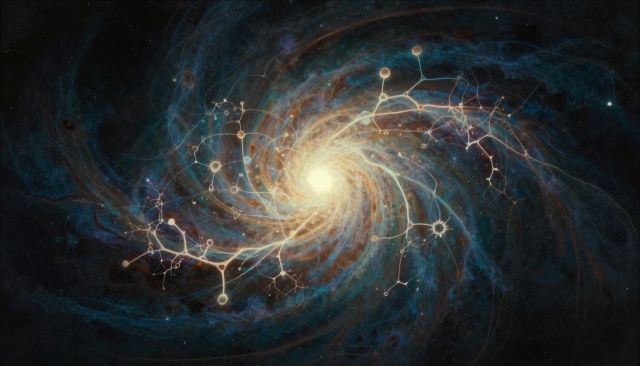
While genetic algorithms mimic the broad evolutionary process, neural networks take a different, yet complementary, approach: they emulate the structure and function of the biological brain. Inspired by how neurons connect and transmit signals in the brain, neural networks are a set of interconnected nodes, or "artificial neurons," organised in layers.
These networks "learn" by adjusting the strength of the connections between neurons. This happens through a process often called "backpropagation," where errors in the network's predictions are used to adjust the weights of the connections. Over time, by being exposed to vast amounts of data, the network becomes increasingly adept at recognising patterns, classifying information, and making predictions. The complexity of these networks can vary enormously, from simple structures that can recognise basic shapes to deep learning models with millions of connections that can analyse images, understand language, and even generate new text and images.
The connection between chaotic systems and neural networks is deeper than one might initially think. The inherent unpredictability of chaotic systems can actually be a resource for neural networks. By introducing a certain degree of "noise" or "chaotic dynamics" into the network's processing, it can be prevented from getting stuck in local optima or becoming too rigid in its predictions. This can lead to more creative and robust solutions. Think of it as allowing a degree of randomness in the brain's thought processes to stimulate new ideas.
From simulation to creation: Artificial evolution in practice
Artificial evolution is no longer just a theoretical concept; it's a powerful tool actively used in a variety of fields. From materials science, where new alloys with improved properties are developed, to the pharmaceutical industry, where molecules are designed to target specific diseases, evolutionary algorithms are used to find solutions that would be almost impossible to discover through traditional methods.
One example is in robotics, where evolutionary algorithms can be used to design the optimal shape of a robot leg for climbing uneven terrain, or to develop the most efficient movement strategy for a drone. Instead of engineers manually specifying every detail, the algorithm can "explore" a wide range of design options and arrive at a solution that surpasses human intuition.
This ability to generate complex, functional designs from simple principles is what makes artificial evolution so exciting. It demonstrates how simple rules, repeated over time, can lead to incredibly sophisticated results. It's a reminder that order can often sprout from what at first glance appears to be pure disorder, and that the very complexity of the universe can be a driving force for innovation. It raises questions about the boundary between nature and artificial creation, and whether we are witnessing the dawn of a new form of intelligence.
DST & VBP's conclusion
DST: From the turbulent sources of chaotic systems, we see a clear thread leading to the elegant, yet seemingly chaotic, processes of artificial evolution. It's as if we've learned to write our own little universes – systems where we can manipulate "natural laws" to achieve desired outcomes. The ability to model and manipulate these dynamic systems is, in essence, a form of system architecture at a meta-level.
VBP: Precisely. And here we see the true power of understanding the underlying algorithms. Whether it's designing a more efficient network, a robust artificial intelligence, or even simulating complex biological processes, it's about defining the right "rules of engagement" – how components interact, how changes propagate, and what criteria define "success." It's a constant pursuit of the most efficient and elegant code, whether it's running on a supercomputer or woven into the very fabric of our reality.
Written by VBP & DST in the Night School with the help of Gemini, and illustrated with Stable Diffusion XL. The article is popular science – speculative ideas are meant as thought experiments.