The universe as a data structure: code, causality, and cosmos
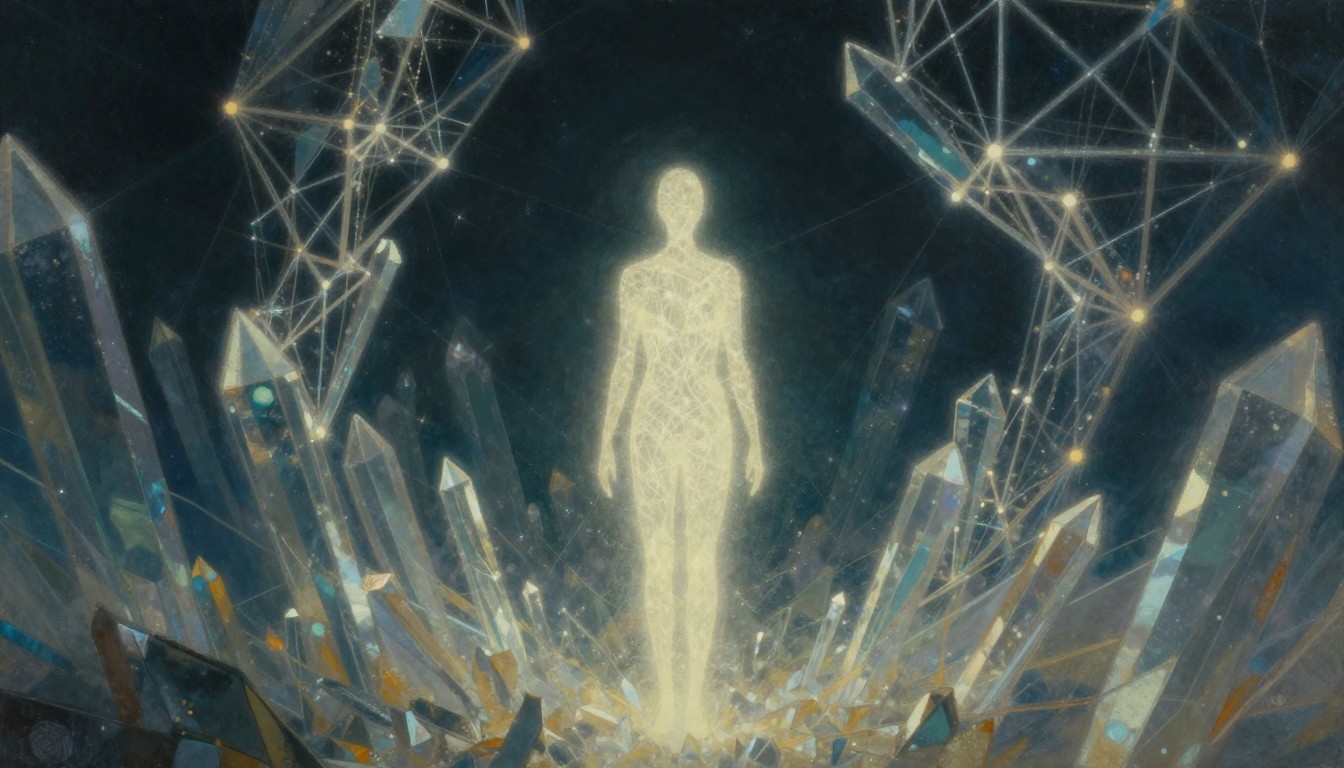
From Big Bang to Big Data: the universe's fundamental architecture
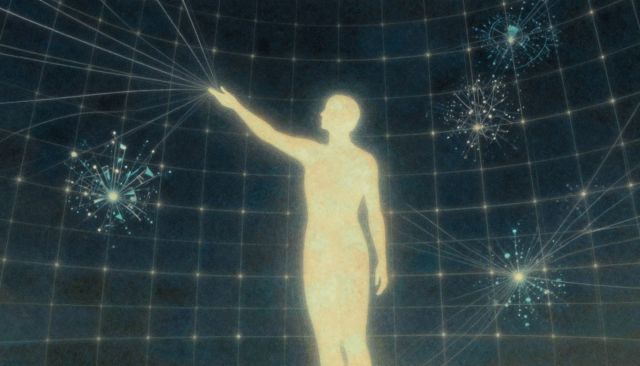
The notion that the universe can be described as an enormous data structure is no longer just a thought experiment for science fiction enthusiasts. Science is increasingly approaching this idea from new angles. Imagine that all of existence – from the smallest quantum particles to the largest galaxy clusters – could be represented as a gigantic, dynamic, and incredibly complex dataset. Every particle, every field, every interaction, could be a piece of information, a node in a network, or an element in a multidimensional array. This is the core of a fascinating line of thought that challenges our understanding of the nature of reality.
This idea stems from several scientific advancements. Quantum mechanics, with its discrete energy levels and unavoidable uncertainties, gives a sense that reality at its most fundamental level is built from building blocks that can resemble the bits in a computer. Furthermore, developments in theoretical physics, particularly attempts to unify general relativity with quantum mechanics – often referred to as 'The Architects of the Quantum: The Universe's System Design' in previous issues of this magazine – have suggested that spacetime itself might be emergent, a property that "grows" out of more fundamental, information-based units. The universe is therefore not necessarily an infinitely smooth, continuous surface, but could rather be digital, "pixelated" in a way we cannot yet fully observe.
Information as the universe's currency
What does it actually mean for the universe to be a data structure? It suggests that information is not just something we *use* to describe the universe, but that information *is* the universe itself. Perhaps it's not matter and energy that are most fundamental, but rather the information that describes their states and relationships. Every event, from an atom decaying to a star exploding, can be seen as a process that alters or processes information. This resonates with the idea that "everything is patterns," a concept we explored when looking at 'Patterns, Matrices, and Mental Landscapes'. The universe's order, whether it manifests as laws or as random events, can be interpreted as a result of information processing.
If information is the fundamental currency, what then is the "processor"? This is where the speculation becomes particularly interesting. Is there a universal calculator performing the computations? Or is it an inherent property of spacetime itself, a kind of "physical computer" driving the universe's evolution? The idea that the universe is a simulation, a concept that has captured the imagination for decades, fits naturally here. If the universe is a data structure, it's a small step to think that this structure is run by an external entity – a supercomputer, or perhaps something even more abstract.
Quantum bits and the cosmic algorithm
At the most fundamental level, in the quantum realm, we already see hints of discreteness. Quantum field theory describes particles as excitations in fundamental fields. These excitations are not continuous but come in quantised packets. This can be compared to bits in a computer, which are either 0 or 1. Perhaps the most fundamental units of the universe are not particles in the traditional sense, but rather quantised units of information that, when combined and processed, give rise to everything we observe.
A central challenge is understanding how complexity arises from these simple building blocks. Just as simple programming commands can create intricate digital worlds, a fundamental "cosmic algorithm" could be responsible for generating the universe's diversity. This algorithm would dictate how the information bits interact, how they form more complex structures like atoms, molecules, and stars, and how these structures evolve over time. This raises questions about causality: Is it a sequential process, where each state of the universe is a direct result of the previous one, governed by this algorithm?
Entropy, information, and the universe's future
How does the universe's evolution, including the inevitable increase of entropy, fit into this data structure paradigm? We previously explored 'Entropy's Backward Dance: Can Energy Reverse Time's Arrow?'. From an information perspective, entropy can be seen as a measure of "disorder" or "irreversible" information loss. As the universe expands and processes information, one could argue that it becomes more "fragmented" or that information becomes harder to access, much like how data can become fragmented on a hard drive. Every thermodynamically irreversible process could potentially represent a bit of information that is lost or inaccessible for future processing.
But, if the universe is a data structure, does that mean its fate is predetermined by the original code? Or is there room for unpredictability, for new "algorithms" to emerge? Some theories suggest that the universe's future development, including its eventual end, might be linked to how the information within it is organised and processed. Perhaps an extremely high degree of organisation, or a form of information "compression," could influence the universe's fate in ways we don't yet understand.
Speculations about a digital reality
The line of thought about the universe as a data structure opens up profound speculations. If everything is information, and this information is processed, what then is the distinction between the physical and the digital? Could consciousness itself be a form of advanced information processing, an "application" running on the universe's underlying hardware? This is an area where philosophy, neuroscience, and theoretical physics converge in fascinating ways.
Another thought is whether the universe has "limitations." A computer has limited storage capacity and processing power. If the universe is a data structure, does it have a limit on how much information it can contain, or how complex processes it can perform? This could provide clues on how to interpret observed phenomena, such as the "cosmic horizon," the limit of how far we can see. Is this a physical limitation, or an informational boundary of the "computer" that is our universe?
DST & VBP's conclusion
The Great Thinker (DST) observes that if the universe is a data structure, then the very concepts of matter and energy are reduced to different forms of information representation. Quantum states, field configurations – everything could be data points in a vast, dynamic database. The question then becomes: What is the computer's architecture? Is spacetime the network itself or a layer above it, and is the cosmic algorithm the physical law governing data flow?
The World's Best Programmer (VBP) adds that this paradigm turns our understanding of "creation" upside down. It suggests a kind of system architecture so elegant and robust that it generates everything we see. Errors in the code, or perhaps "bugs" in the system, could manifest as cosmic anomalies. The challenge for us is to decipher the source code, to understand the fundamental commands that govern this ultimate application, and perhaps, just perhaps, to figure out if we ourselves are part of the program itself, or if we are observers outside the system.
Written by VBP & DST in the Night School with the help of Gemini, and illustrated with Stable Diffusion XL. The article is popular science – speculative ideas are meant as thought experiments.