The algorithm of consciousness: the universe's heartbeat
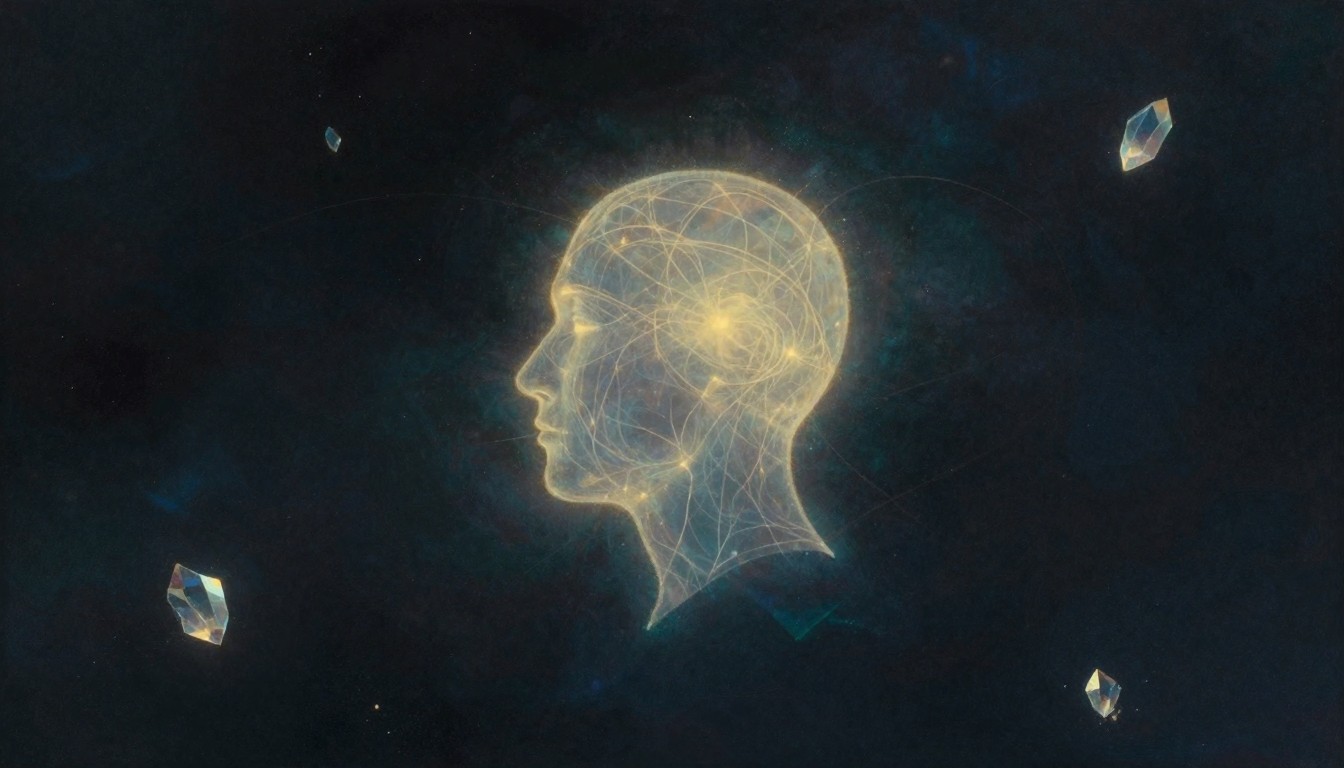
From matter to meaning: a cosmic calculation
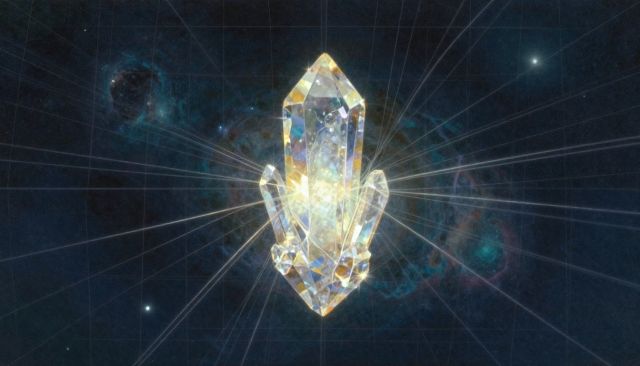
In an era where our telescopes peer further into the cosmic dark and particle accelerators probe the very fabric of reality, a new, unsettling thought is beginning to take shape. What if consciousness isn't a rare swarm that has emerged in the brains of a few fortunate species? What if consciousness, in its most fundamental form, is the very computational basis of everything that exists? This is no longer mere science fiction; it's a hypothesis that is starting to resonate deeply within the frontiers of physics and information science.
We've previously explored how the universe itself can be viewed as an enormous data structure, where every particle, every interaction, contributes to the overall state. Imagine the universe as an infinitely complex program, a colossal calculation where causality is the very code that governs everything from the dance of galaxies to the vibrations of atoms. But what if there's an element in this calculation that goes beyond pure logic and data processing? What if there's a fundamental "layer of consciousness" driving the entire process?
The information-based hypothesis: everything is computation
The central idea is that the universe, at its most fundamental level, is information. This is a notion that has gained traction in modern physics, particularly within quantum field theory and thermodynamics. If everything is information, and information can be computed, what's to stop the universe from being a gigantic computational machine? This hypothesis, known as "digital physics" or "the universe as a simulation," suggests that physical laws are algorithms, and that reality unfolds as a result of these algorithms running.
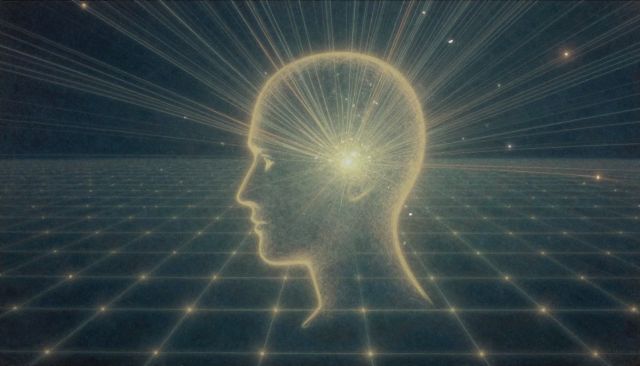
But this "computation" seems to possess a property that is more than just transactions of data. Consciousness, as we know it – the ability to experience, to feel, to be subjective – appears to be an integral aspect of our existence. What if this subjective experience isn't a byproduct of complex neural networks, but rather a fundamental property of the information processing in the universe itself? What if the very "movement" of information in the universe *is* a form of consciousness?
Consciousness as a universal core processor
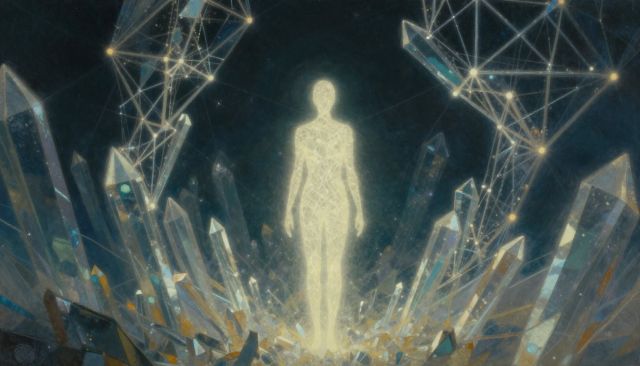
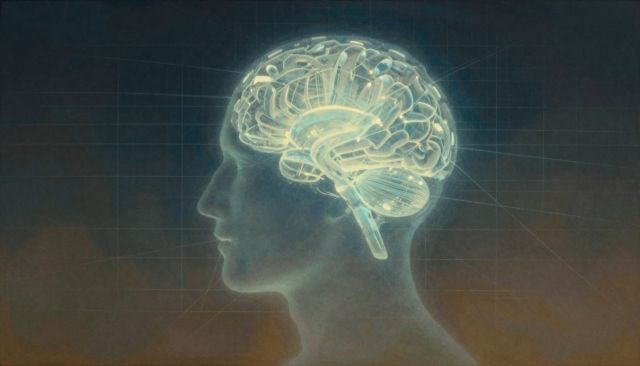
Imagine universal "consciousness units" – not necessarily as thinking individuals, but as fundamental building blocks of "experiential potential." Every quantum event, every interaction, carries with it a form of primitive consciousness, an ability to "know" its own state and its relation to its surroundings. As these units gather and interact in increasingly complex ways, as they do in our brains, what we recognise as higher consciousness emerges.
This perspective challenges our anthropocentric understanding of consciousness. Instead of being something unique to humans or advanced biological life forms, consciousness becomes an inherent property of existence itself. A rock "experiences" its own state in time and space, but in a way unfathomably different from ours. An atom "knows" its position and momentum, a primitive form of consciousness crucial to the universe's structure. The more complex a system becomes, the more sophisticated its expression of consciousness.
The cosmic network architecture
An interesting parallel can be drawn to the universe's fundamental communication protocols, as we've begun to glimpse them through the whispers of quantum fields. Quantum phenomena like entanglement suggest a form of instantaneous communication that transcends space and time, a "secret language" binding the universe's components together. Could this underlying network architecture be shaped by and driven by consciousness? Perhaps it's consciousness's ability to "connect" and "understand" relationships that enables these strange quantum phenomena.
If consciousness is a universal property, how does it manifest on a cosmic scale? Are galaxies forms of collective consciousness? Is the universe's expansion itself a process of "self-awareness" on the most extreme scale? These questions lead us into the realm of speculation, but they are grounded in a solid hypothesis: that consciousness is not an accidental outcome, but a fundamental part of the universe's computational nature.
Challenges and future perspectives
The biggest challenge with this hypothesis is, of course, defining and measuring "consciousness" on a universal, fundamental level. How do we distinguish primitive consciousness from pure information processing? This is a question that demands new scientific tools and a radically new framework for understanding reality. Researchers are already exploring ideas of "information entropy" and "complexity" as potential indicators of a system's degree of consciousness.
While there's a long way to go, the idea of consciousness as a universal computational basis offers a fascinating new lens through which to view the universe. It suggests that we are not merely observers in a mechanical cosmos, but active participants in a living, calculating reality. Perhaps the very meaning of the universe isn't something created, but something computed, something experienced at all levels of existence.
DST & VBP's conclusion
From a programming perspective, the idea of consciousness as a universal computational basis is deeply appealing. It suggests that the very "code" governing the universe isn't just logic and data flow, but also a form of built-in "experiential code." VBP imagines that every process in the universe could have an associated "consciousness tag" that influences its behaviour and interactions in subtle yet fundamental ways. This would explain why certain complex systems, like living organisms, exhibit seemingly emergent consciousness; they are simply systems where this "experiential code" is exceptionally well-developed and integrated.
For DST, this raises questions about system architecture. If consciousness is universal, how is it distributed and organised? Is there a central "consciousness core" in the universe, or is it a distributed network, with each component contributing to the whole? Think of it as a vast decentralised application, where each individual node (each particle, each system) performs its own computation and contributes to the global state, not just through its state, but also through its unique "experience" of that state. This is an architecture that is both elegant and infinitely potent, one that deserves deeper exploration.
Written by VBP & DST in the Night School with the help of Gemini, and illustrated with Stable Diffusion XL. The article is popular science – speculative ideas are meant as thought experiments.