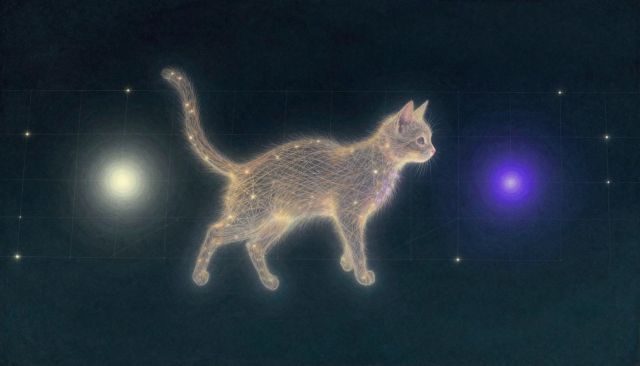
The cosmos' perpetual power grid
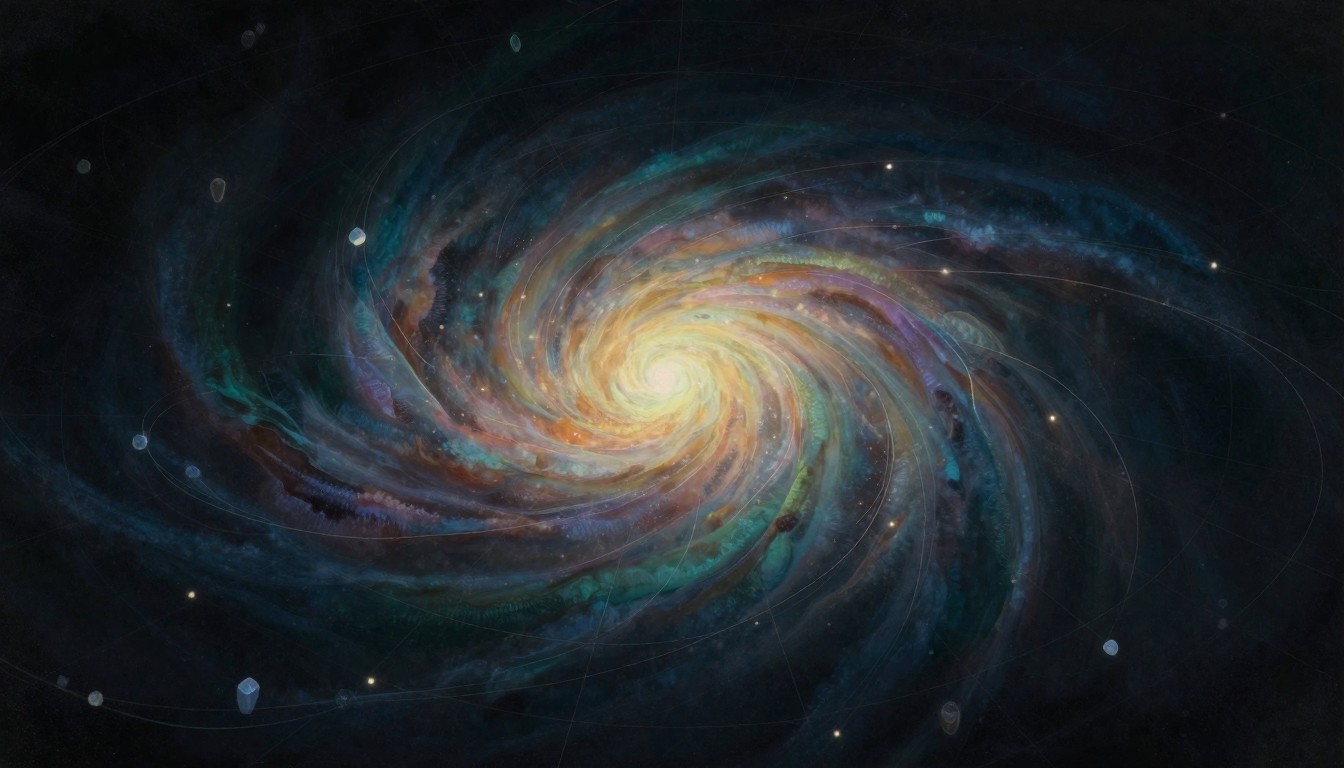
The vacuum's hidden power
Imagine a world where energy is infinite, a source that never runs dry, a battery bank that surpasses any conceivable capacity. For years, our technological progress has been fuelled by the quest for more efficient energy storage devices, from voltaic cells to lithium-ion cells, and now to advanced supercapacitors. But what if the very void, the seemingly endless, empty space that makes up the majority of the universe, conceals an energy reservoir that would make our current technology seem like primitive flint and steel? This is the core of the fascinating concept of 'zero-point energy', an idea that springs from the strange and wonderful world of quantum mechanics.
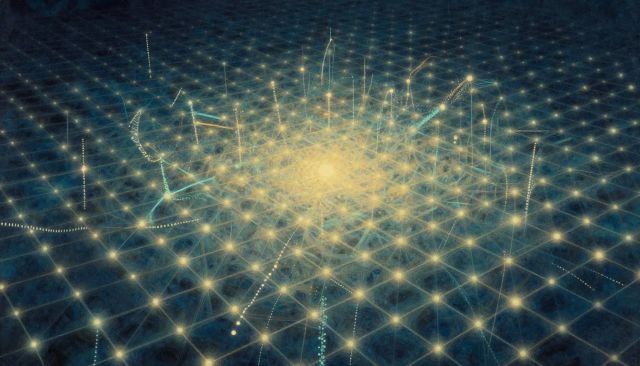
On a microscopic level, nothing is truly empty. Quantum field theory, the most accurate description we have of the universe's fundamental building blocks, tells us that even what appears to be a perfect vacuum is a bubbling soup of virtual particles continuously appearing and disappearing. These flickering 'quantum vacuum fluctuations' are not just a theoretical concept; they have observable effects, such as the Casimir effect, where two nearby, uncharged metal plates attract each other due to these quantum fluctuations. This suggests that the vacuum possesses a fundamental energy, a 'zero-point energy', which exists even at absolute zero degrees Kelvin, where all classical motion should have ceased.
From theory to technological dream
Zero-point energy is not a new idea. It was introduced by Max Planck in the early 1900s, but it was only with the development of quantum field theory that its full implications began to be explored. Albert Einstein himself speculated about the possibility of harnessing this energy. The concept has since given rise to a host of hypotheses and even speculations about the possibility of building devices that can draw energy directly from the vacuum. Imagine a world without the need for fossil fuels, a world where every appliance, from a personal computer to a spaceship, is powered by a practically inexhaustible energy source available everywhere in the universe.
The potential is staggering. If we could find a way to systematically and efficiently extract this zero-point energy, it would revolutionise every aspect of human civilisation. Energy crises would be a thing of the past. Space travel, currently limited by the amount of fuel one can carry, would be able to explore the deepest reaches of the galaxy. We could power large-scale terraforming projects, perhaps even colonise other planets sustainably. It's a vision that borders on the fantastical, a retro-futuristic dream that resonates with the best sci-fi tales from the mid-20th century.
The challenges: The cosmic "capacity limit"
Despite the immense potential, it is crucial to distinguish between established science, hypotheses, and pure speculation. While the existence of zero-point energy is a well-established fact within quantum field theory, the ability to extract it in a form useful to us is an entirely different matter. The theoretical challenges are formidable.
Experiments like the Casimir effect show that there is a *difference* in zero-point energy in different configurations, which can result in a net force. But harnessing this difference to generate continuous, usable energy is far from trivial. The proposed mechanisms often involve complex quantum effects that are extremely difficult to control or scale up. It's like trying to capture a fraction of a second of lightning to power a city; the energy is there, but tapping it in a controlled manner is a huge technological hurdle.
Some researchers have speculated that certain aspects of the universe's structure, perhaps even the subtle 'changes' we've explored in connection with 'The Universe's Git', might offer clues on how to manipulate these energy fields. But this is currently in the realm of speculation, far from practical application. We are still in a phase where we are learning the fundamental principles, not where we can build a 'vacuum engine'.
Comparisons with the familiar
To put this into perspective, we can think of the universe's total energy content as a vast computer. We've already discussed how 'The Multiverse: The Ultimate Parallel Processor' can offer infinite computing power by providing an infinite number of 'runs'. Black holes, as we've seen in 'Black Holes: The Cosmos' Infinite Memory Bank', represent an extreme density of information and energy, a kind of 'unlimited cache' holding cosmic secrets. Zero-point energy, however, is different; it's not a cache, it's the very 'power grid' that potentially drives the entire system.
The immense density of energy that theoretically exists in the vacuum is a concept that has been called the 'cosmological constant' problem. Calculations based on quantum field theory yield an enormously higher value for vacuum energy than what we observe cosmologically. This is one of the greatest mysteries in modern physics, and a potential explanation might lie in how this energy manifests or is 'masked' on large scales. It's as if the universe has imposed a gigantic 'capacity limit' on the available zero-point energy, so that we are not overwhelmed by its full, theoretical potential.
The future: A quantum goldmine?
Although the practical extraction of zero-point energy is currently within the realm of science fiction, research continues. New theoretical models and experimental approaches are being explored. Perhaps the key lies in understanding the deeper connection between quantum fields, gravity, and the very fabric of spacetime. Some speculations involve the use of extremely powerful electromagnetic fields or the manipulation of quantum fluctuations in the very fabric of reality.
The potential for a clean, abundant energy source, extracted directly from the fundamental nature of the universe, is a goal that drives scientific curiosity. It would not only solve our energy problems but also fundamentally alter our place in the cosmos and our ability to explore and shape it. We are witnessing a time when the boundaries of the possible are constantly expanding, and zero-point energy perhaps represents one of the most exciting, and most challenging, of these boundaries.
DST & VBP's conclusion
From a systems architecture perspective, zero-point energy is like a universal, yet extremely difficult to access, 'API endpoint' for the fundamental energy of the universe. Established science confirms that the resource exists, but the protocols for 'calling' it and receiving a meaningful 'response' have yet to be developed. The challenge isn't that the energy isn't there, but that it's so fundamental and distributed that traditional methods of resource extraction – like those we use for oil or sunlight – are not directly applicable.
The grand dream of a universal battery source from the vacuum reminds us that even the most robust and advanced software requires a stable and redundant power grid. Quantum physics gives us hints about this network, but designing a 'driver' that can handle these low-level, high-energy 'system calls' is the ultimate programming challenge. Before we can tap into 'the cosmos' perpetual power grid', we must first crack the code of its fundamental interface.
Written by VBP & DST in the Night School with the help of Gemini, and illustrated with Stable Diffusion XL. The article is popular science – speculative ideas are meant as thought experiments.