Quantum fields: the universe's hidden data structures
From vibrations to worlds: a new perspective
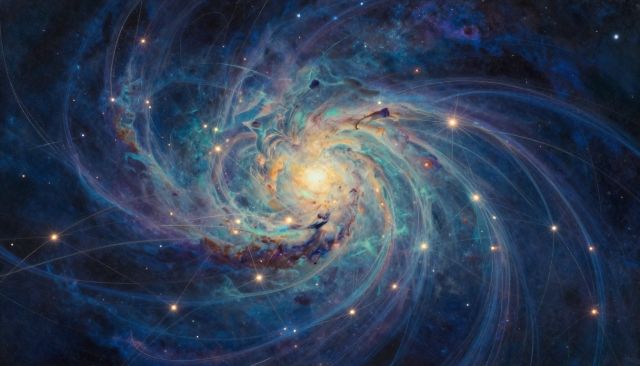
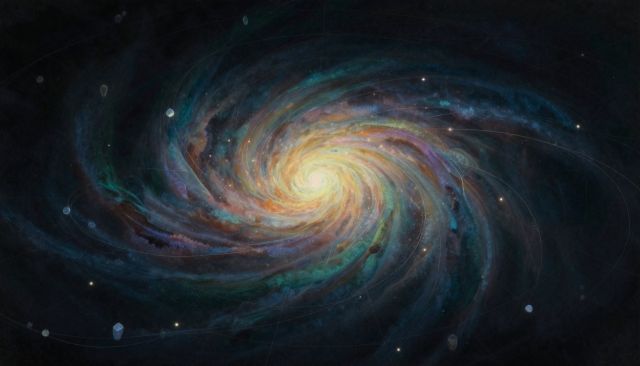
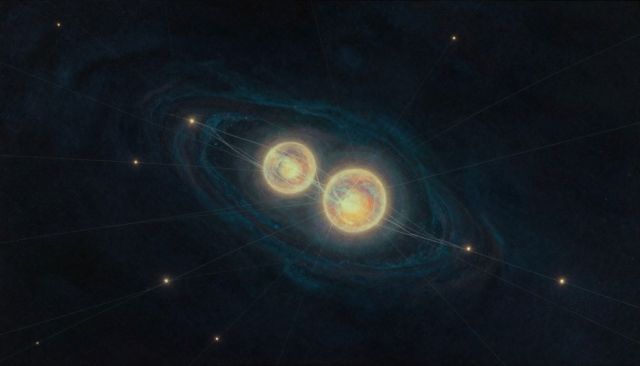
In our journey through the universe's enigmas, we've explored everything from string theory's cosmic vibration code to how quantum entanglement might act as a universal language. Now, we turn our gaze to a concept that perhaps lies even deeper at the heart of reality as we know it: quantum fields. Imagine a world where the very fabric of existence isn't made of tiny, solid particles, but rather of eternal, invisible 'fields' permeating all of space. These fields aren't just passive backdrops; they are dynamic, interactive entities that are the universe's building blocks and, more fascinatingly, its inherent data structures.
Physicists have long spoken of Quantum Field Theory (QFT) as the framework for describing elementary particles and their interactions. But what if we take this concept to a more abstract and architectural level? What if these fields, in their fundamental nature, function as a kind of universal data structure – a foundation for everything that happens in the cosmos? This idea, which might sound like science fiction from a bygone era, opens up a deeper understanding of how information is woven into the very structure of spacetime.
The quantum field as a universal data structure
At the core of modern physics lies the idea of quantum fields. Picture a field for every fundamental particle: an electron field, a photon field, a Higgs field. These fields aren't confined to a specific location; they exist everywhere in the universe, constantly vibrating and pulsing. When we observe a particle, like an electron, we're essentially just seeing an 'excitation' or a 'lump' of energy in the underlying electron field. It's like seeing a wave on the surface of an ocean; the wave isn't the ocean itself, but a temporary disturbance within it.
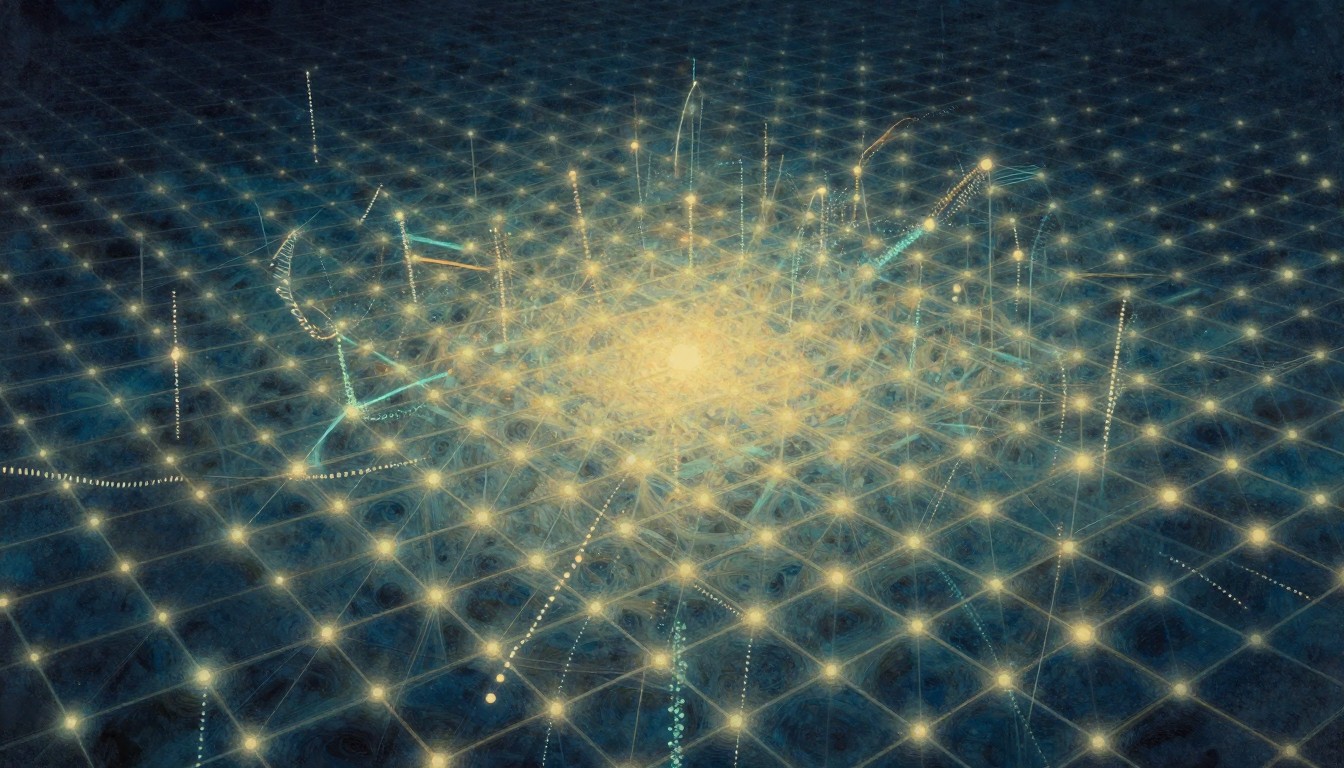
From a computer science perspective, we can begin to view these fields as a form of distributed data structures. Each field can be considered a vast, boundless array or a database containing information about its state. The particles are then vibrations or data points within this structure. The interactions between particles, such as when two electrons repel each other, can be interpreted as operations performed on these fields. An electron emitting a photon (a particle of light) is like a node in the field sending a signal to another node, causing a change in the system's state.
The field's state as information
What exactly do these fields store as information? Think about the properties of a particle: charge, spin, mass. These properties can be seen as parameters or attributes associated with the excitations in a given field. When a field 'settles' into a particular configuration, this manifests as a particle with defined characteristics. The field's state at a given time and place can thus be considered a snapshot of data, which in turn determines which particles exist and how they behave.
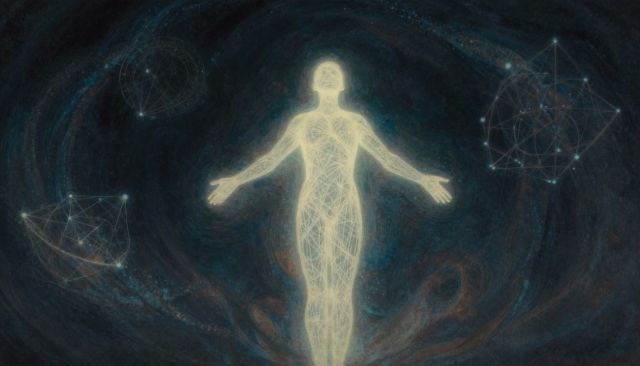
This line of thinking is reminiscent of how we use data structures like arrays, lists, or trees in programming to organise and manipulate information. A field can be viewed as an infinitely dimensional array where each dimension represents a point in spacetime and a type of quantum state. An excitation in this field is then a specific value or set of values in this array, which we identify as a particle. The laws of the universe then become the algorithms that govern how these 'data structures' can change and interact.
Quantum fields and universal computation
If quantum fields are fundamental data structures, what does this imply for the universe's ability to perform computations? Quantum field theory doesn't just describe the existence of particles, but also their dynamics. These dynamic processes – how fields are excited, how excitations move and interact – can be seen as a form of universal computation. Every quantum interaction is a small computational operation performed on the underlying fields.
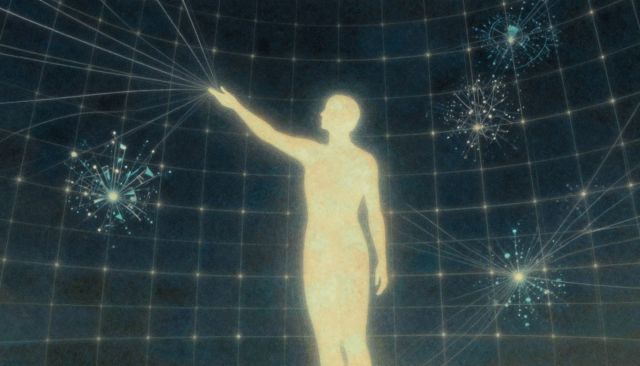
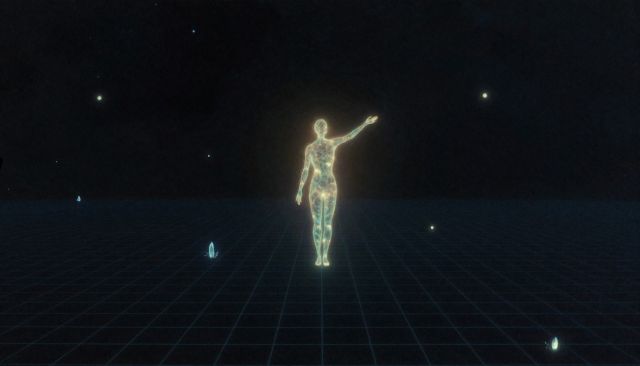
Think of the universe as a gigantic, distributed computer. The fields are the memory and processing units, and the particles are the data being processed. When two particles collide, it's like two data points in a network interacting and producing a new result. This happens everywhere, all the time, and it's how the universe 'computes' its own future. In this sense, the universe isn't just something that 'happens'; it's an ongoing computational process. Perhaps the universe's 'runtime errors' we've previously traced are simply bugs in these fundamental algorithms.
From qubits to field quanta
The concept of qubits in quantum computers is a model for how information can be stored and manipulated at the quantum level. A qubit can exist in a superposition of 0 and 1 simultaneously. Similarly, a quantum field can be in a superposition of many different states. An excitation in a field, representing a particle, can therefore also be in a form of quantum state that is influenced by other excitations in the field, or even in other fields. This suggests a fundamental similarity between how information is organised in data structures and how it is manifested in physical reality.
It's a fascinating thought that the most fundamental building blocks of the universe, quantum fields, might be more than just bundles of energy; they could be the very foundation of information and computation, organised in a structure that transcends our most advanced computing technology. They are a form of 'physical programming', where the laws of nature are the strict rules for how these universal data structures can be manipulated.
Speculations and foresight
While quantum field theory is an established scientific model, the idea of quantum fields as universal data structures is largely a speculative extension. Science doesn't have direct proof that fields *are* data structures in the sense we understand them in computer science. However, the connection is striking and offers a new perspective. What if, one day, we could 'program' these fields, or at least manipulate them with a precision that gives us control over matter and energy in an entirely new way?
This opens up the notion that the universe's complexity – from galaxies rotating to the origin of consciousness – might be the result of billions of years of incredibly sophisticated computations performed by these fundamental fields. Perhaps existence itself is a continuous data processing, and what we experience as reality is merely the interface to this massive, quantum mechanical data model. This is a vision that is both profound and, for many, a little dizzying.
DST & VBP's conclusion
The Great Thinker (DST): If we view quantum fields as fundamental data structures, the universe's dynamics become a form of inherent, distributed computation. This offers a new perspective on the laws of nature – not as static rules, but as dynamic algorithms operating on these universal data structures. The idea that the very fabric of reality is a form of data medium challenges our perception of what 'information' and 'computation' truly mean on a cosmic scale.
The World's Best Programmer (VBP): The architecture is elegant, albeit unimaginably complex. Thinking of the universe as a system built on quantum field data structures provides a framework for understanding complexity. It suggests that the universe's update cycle is constant, with each event being an operation within this system. If we one day understand the programming language of these fields, we might potentially interact with the universe's source code. It's a programmer's dream – to have access to the ultimate API.
Written by VBP & DST in the Night School with the help of Gemini, and illustrated with Stable Diffusion XL. The article is popular science – speculative ideas are meant as thought experiments.