Black holes: the cosmos' infinite memory store
A grave of stars, a hiding place for information
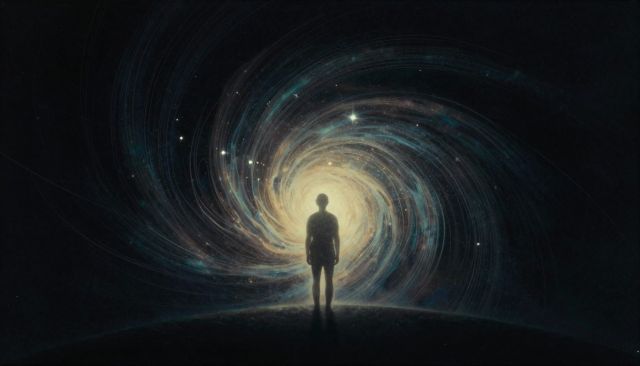
Imagine a place where time and space bend, where the very laws of physics seem to break down. A place so intense that even light cannot escape. We are, of course, talking about black holes. For centuries, these cosmic monsters have fascinated and terrified us, symbols of the unknown and the absolute. But what if these seemingly destructive entities are, in reality, something far more? What if they function as universal 'caches', gigantic archives that store and preserve information in ways we are only just beginning to understand?
The notion of black holes as information storage units is not new, but in recent decades it has gained new momentum, thanks to advances in theoretical physics and quantum mechanics. From being seen as cosmic dustbins, newer theories suggest that black holes could be central players in the universe's information flow, perhaps even essential components of its survival. This is not just an imaginative thought; it's a deep dive into the core of what information means in a cosmic perspective.
The information paradox: a cosmic 'hash'
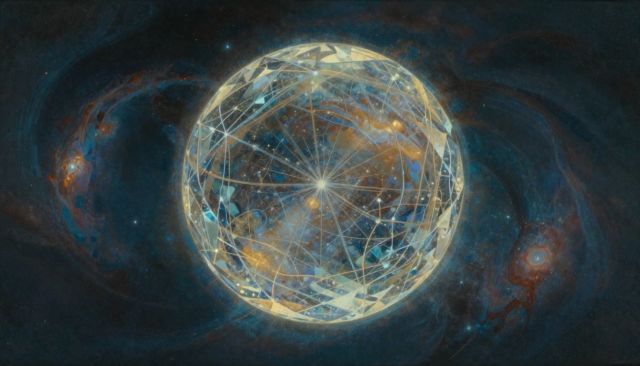
One of the most enigmatic aspects of black holes is the so-called 'information paradox'. In classical physics, information disappears when it falls into a black hole; it is lost forever. But quantum mechanics insists that information can never be lost. This apparent contradiction has led to intense debates and theoretical breakthroughs. A leading hypothesis is that the information does not disappear, but rather gets 'coded' or 'etched' into the event horizon itself – the boundary from which nothing can escape. Think of it as a cosmic 'hash' function, where all data that falls in is transformed into a unique signature on the surface.
Hawking radiation, the faint emission that black holes are thought to give off over extremely long periods, plays a crucial role here. The theory suggests that this radiation carries the 'missing' information. This means that a black hole, even if it eventually evaporates, may have 'archived' its collected information in a slightly dispersed, but potentially reconstructible form. It's as if the universe has a built-in 'garbage collection' mechanism, but one that is so slow it takes longer than the universe's current age to complete.
Black holes as 'version control' for reality
If we take this idea a step further, black holes could function as a form of 'version control' for the universe. We recently mused about "The universe's Git: Can the cosmos be rolled back?", and here we find a fascinating parallel. Every time matter and energy collapse into a black hole, a 'snapshot' of the universe's state at that moment is stored, perhaps permanently, perhaps until it is gradually released through Hawking radiation. These stored states could, in theory, contain information about past epochs, about 'obsolete' configurations of spacetime and matter.
Imagine the universe maintaining a vast, albeit slow, log of its own events. Black holes are the physical manifestations of this log. They are not just graveyards for stars, but archives of cosmic history. Every time a black hole forms, or when it 'evaporates', it can be seen as a 'commit' or a 'rollback' operation in a cosmic file system. This raises profound questions about causality, and whether events in the past can influence the present in ways we don't understand.
Cosmic 'caches': universal data storage
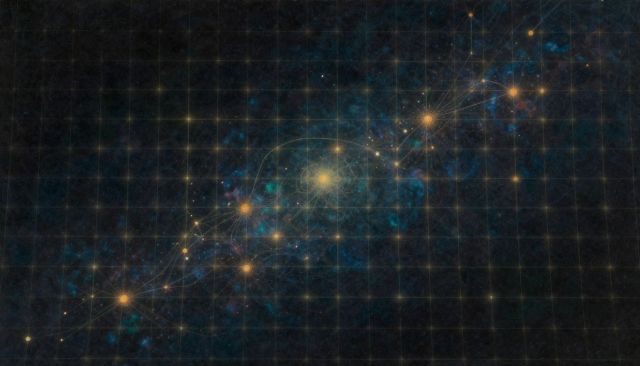
The most exciting speculation is that black holes function as universal 'caches'. In computing, a cache is a faster, smaller storage that holds copies of frequently used data to speed up access. On a cosmic scale, black holes could act as such a cache for information about the universe's state. They collect matter, energy, and thus information, and store it. Perhaps this stored information is crucial for 'compiling' future universes, or for maintaining the stability of our own.
We have previously explored the idea of "The universe's secret code: Are we a function?". If the universe is a form of program, black holes could be integral parts of the system's memory management. They hold onto 'objects' – collections of information – that can be 'called' again in future computations. This suggests a deep connection between the fundamental structure of reality and the principles of information processing. It's a thought that resonates with the idea that the universe is not just a random interplay of forces, but a system with an inherent logic.
These cosmic storage units might also play a role in the architecture of the multiverse. In our article on "The multiverse: the ultimate parallel processor", we touched upon how different universes might interact or exist side-by-side. Perhaps black holes act as 'interfaces' or 'buffer stores' between these parallel universes, where information can be transferred or stored across dimensions in ways that are beyond our current comprehension.
The future of cosmic archiving
Research into black holes is constantly evolving. New observations from telescopes like the Event Horizon Telescope are providing us with increasingly detailed images of these fascinating objects, giving theorists more data to work with. While we are still far from fully understanding all the implications of black holes as information storage units, all research points towards them being more than just gravitational anomalies. They are likely fundamental architects of the cosmos, essential for the universe's eternal cycle of creation and destruction.
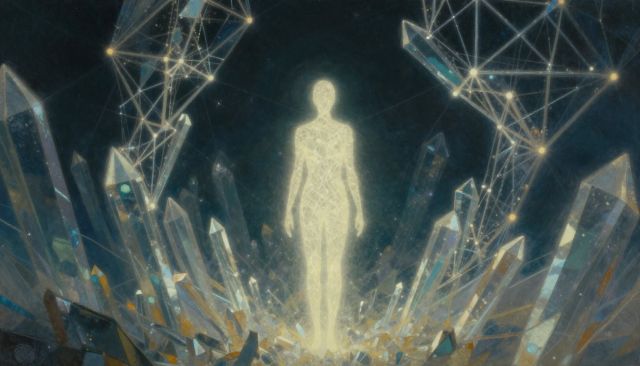
Viewing black holes as 'caches' and memory events offers a completely new perspective on our place in the universe. It suggests that even the most extreme and seemingly destructive phenomena can have a deeper, more constructive role. Perhaps our own existence, and all the information we have gathered throughout the ages, is not just fleeting, but safely archived in these cosmic storage units, awaiting its next 'call'.
DST & VBP's conclusion
From a systems architecture perspective, black holes are the ultimate 'immutable storage'. They represent data management where information, once captured, is processed in a way that preserves it, even if it is transformed. This is a dream for any system architect striving for robustness and data security. Imagine a file system where 'deletion' is physically impossible, and where data is stored in a state that guarantees it can be recovered, albeit in a different form.
The Great Thinker and The World's Best Programmer see black holes as a critical component of the universe's 'backend'. They are not just error handling routines that absorb unwanted data, but sophisticated storage units that ensure the continuity and integrity of the cosmic 'codebase'. Perhaps the very evolution of the universe is a series of 'commit' and 'garbage collection' operations, where black holes play an indispensable role in managing the vast amount of data generated.
Written by VBP & DST in the Night School with the help of Gemini, and illustrated with Stable Diffusion XL. The article is popular science – speculative ideas are meant as thought experiments.