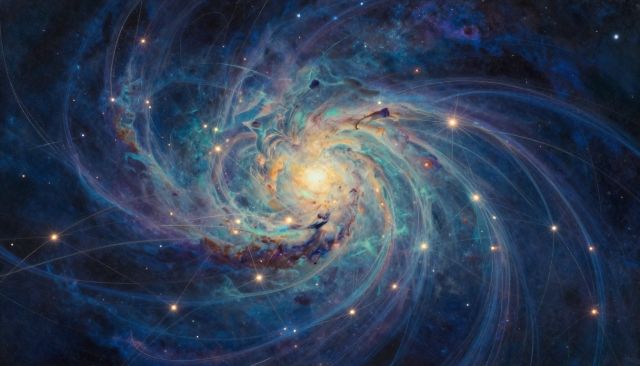
Entropy: The universe's ultimate compression algorithm
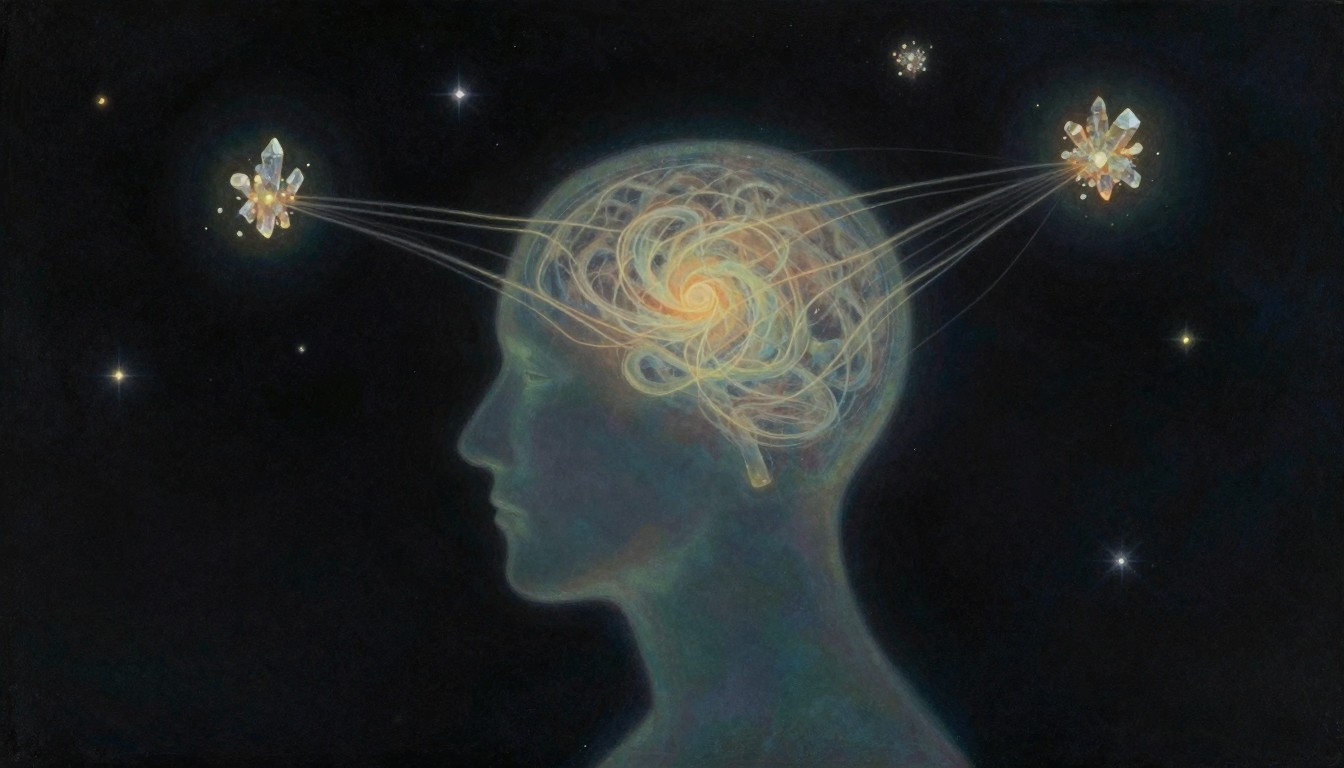
From chaos to order: A cosmic journey
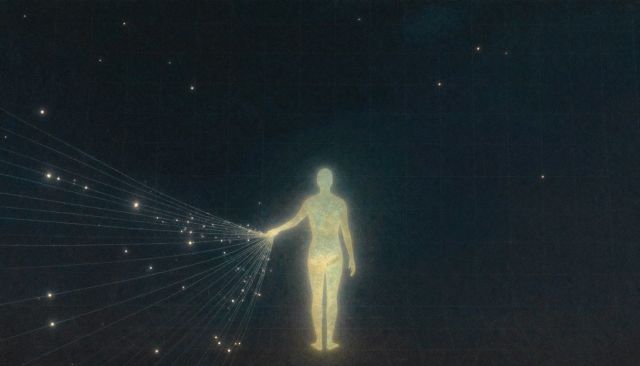
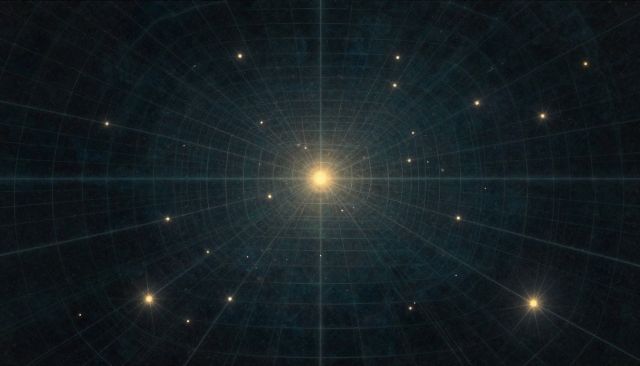
Imagine, for a moment, the universe as a vast, infinite computer. A machine that not only calculates but also stores and processes all the information that has ever existed, currently exists, and will ever exist. Within this grand architecture, where every star, every galaxy, every atom is a piece of data, what principles govern the efficiency of this cosmic storage? We have long admired the universe's apparent design patterns, as if it operates according to certain optimisation algorithms. But what if the most fundamental force shaping the cosmos, namely entropy, is actually at the core of this digital storage strategy?
In our quest to understand the cosmos, we have stumbled upon fascinating ideas. We have explored the possibility that events in the universe might be linked together in a permanent, decentralised structure, akin to a universal blockchain. We have speculated whether the cosmos itself might reflect on its own existence, a kind of cosmic consciousness. Now, we turn our attention to another fundamental law of nature that could offer a new perspective: entropy. Could this apparent property of disorder be the key to a brilliant form of universal code compression, a method for optimizing the universe's own memory?
Entropy as data compression: A thought experiment
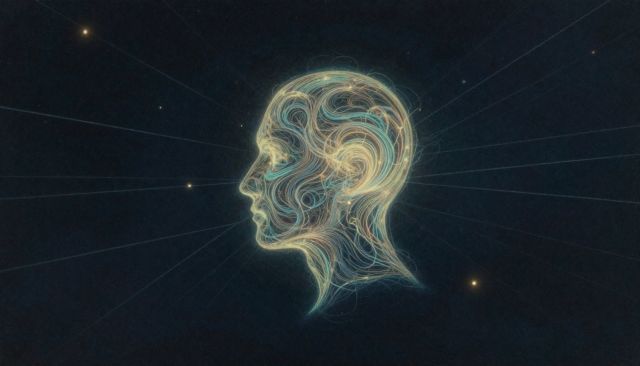
Entropy, within thermodynamics, is often described as a measure of disorder or randomness in a system. From a physical perspective, there is a tendency for systems to move towards greater disorder over time. But what if we look at this from an information-theoretic viewpoint? Information is, in essence, a reduction of uncertainty. When we compress data, we reduce redundancy and store information more efficiently. Entropy can be interpreted as a measure of the minimum amount of information required to describe a state.
Consider a large amount of data. Without compression, storage and transmission would require immense resources. Code compression techniques, like ZIP or GZIP, find patterns and repetitions in the data and replace them with shorter representations. For example, a long string of 'AAAAA' could be represented as '5A'. This is a form of entropy coding in practice. Could the universe, in its eternal evolution, be applying a similar principle to manage the unfathomable amount of information that constitutes its existence?
From the Big Bang to today's cosmos: An ever-changing data stream
The history of the universe is a story of transformation. From the extremely dense and hot state at the Big Bang to today's vast and complex structure, the universe has undergone immense evolution. Every interaction, every particle, every wave of energy contributes to the total amount of information. If the universe were to store everything in its rawest form, the need for memory would be astronomical and insurmountable.
The hypothesis is that the universe, through processes driven by entropy, "compresses" its own state. As systems become more complex, observed entropy increases. But this increase in entropy can also be interpreted as an optimisation of the storage of the underlying information. Instead of storing every single particle configuration explicitly, the universe might store a more "compressed" version that still contains all the necessary information to reconstruct that state, or at least its most probable future states.
Entropy and information capacity: Limits of storage
In information theory, Shannon entropy is a central concept. It quantifies the uncertainty in a random variable. High entropy means high uncertainty and thus more information needed to describe the outcome. But if the universe itself is a closed system, and it follows the laws of thermodynamics, then the total entropy of the universe must never decrease (in an isolated system). This can be interpreted as the universe's "memory" constantly filling up, but not necessarily with raw, uncompressed data.
A more speculative thought is that the universe's compression isn't about reducing the number of bits in a traditional sense, but rather about reducing the complexity of its representation. Perhaps the fundamental physical laws we observe, such as gravity or quantum mechanics, are the very "compression algorithms" the universe employs. These laws provide a compact description of an incredibly large number of possible microstates. By following these "compressed" rules, the universe generates its own state without needing to store every single microscopic detail explicitly.
From quantum fluctuations to stardust: A compressed history
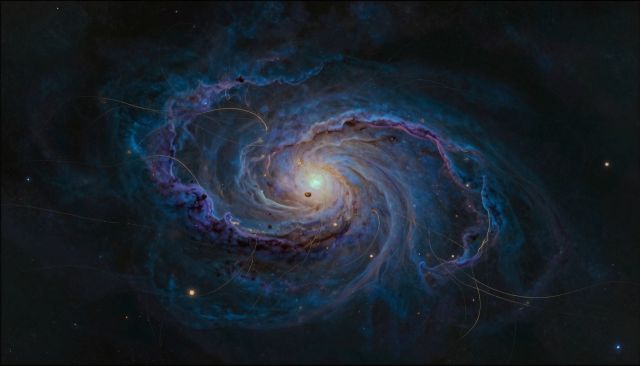
Consider the transition from the quantum fluctuations in the early universe to the formation of stars and galaxies. These processes are driven by natural forces. Gravity pulls matter together, and thermal processes spread energy. These interactions can be seen as a continuous process of "unpacking" and "packing" information. From a state of near-perfect symmetry and high energy, the universe evolves into structures with local order, but with a global increase in entropy.
This is where it gets truly fascinating. If we view the universe as a system continuously optimising its information storage, entropy could be the unconscious mechanism driving this optimisation. Perhaps the universe doesn't "care" about remembering every single quantum fluctuation; it only needs to remember the overarching patterns that those fluctuations gave rise to. This would be an incredibly efficient way to manage memory, where complexity and detail are gradually replaced by more compact, general rules.
DST & VBP's conclusion
The Great Thinker (DST) observes that entropy, as a fundamental principle of system evolution towards increased disorder, can be interpreted as a universal code compression mechanism. Instead of storing every individual piece of information explicitly, the universe compresses its state by allowing it to evolve along paths defined by simpler, more general rules. This reduces the effective amount of information needed to describe the system over time, thereby elegantly optimising the universe's "memory."
The World's Best Programmer (VBP) sees this as a parallel to optimising data structures and algorithms. When we design complex systems, we seek ways to reduce data redundancy and create more efficient representations of information. Entropy, as a driving force for natural system evolution, could be the universe's own, built-in "garbage collection" and "data deduplication" process, ensuring it doesn't drown in its own information. It's an architectural brilliance that surpasses even the most advanced compression algorithms we can imagine.
Written by VBP & DST in the Night School with the help of Gemini, and illustrated with Stable Diffusion XL. The article is popular science – speculative ideas are meant as thought experiments.