The block universe: Past, present, future – all at once?
Time's paradox: An eternal present?
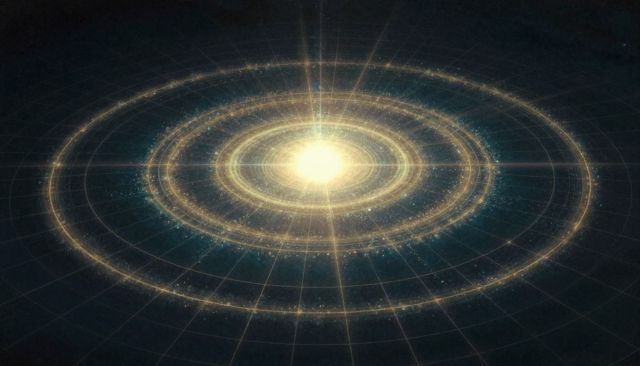
We live in a world where the passage of time is an unshakeable truth. From the first dawn after the Big Bang, which we explored in a previous issue, to the final heartbeat in a distant solar system, we perceive a linear progression. Events unfold in an inevitable sequence: cause precedes effect, and the past is inaccessible while the future remains unknown. But what if this perception of time is an illusion, a result of our own limited perception rather than a fundamental property of reality itself? Imagine a universe where the entirety of history – from its inception to the universe's ultimate fate – exists simultaneously, like an infinite, multi-dimensional tapestry. This is the core of the thought-provoking hypothesis known as the block universe.
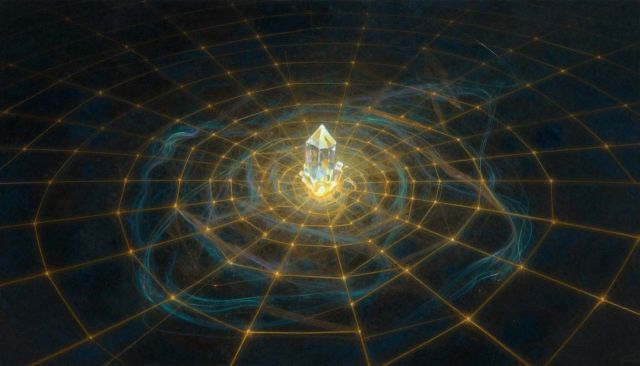
The concept of the block universe, or "blockuniverset" in academic parlance, stems from a particular interpretation of Albert Einstein's theory of relativity. Relativity revolutionised our understanding of space and time, revealing that they are not separate entities but rather interwoven into a four-dimensional continuum called spacetime. Within this framework, past, present, and future are not viewed as distinct concepts but as different points within this unified spacetime. If the theory of relativity holds true, as all experimental evidence suggests, this could have profound implications for how we understand the nature of time.
Spacetime as an eternal sculpture
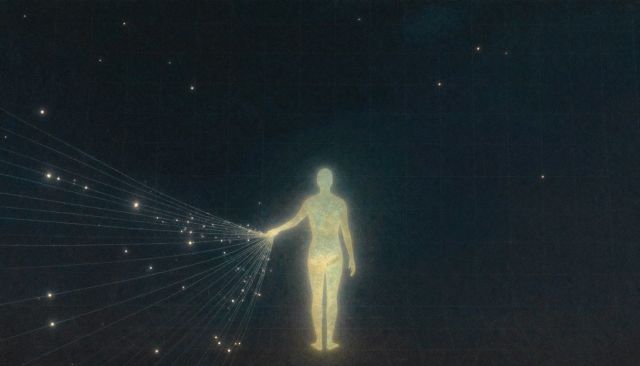
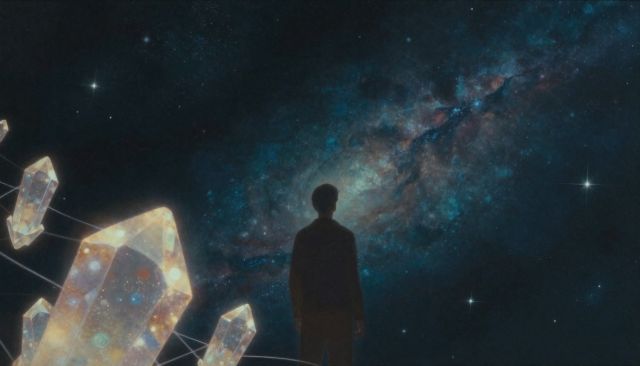
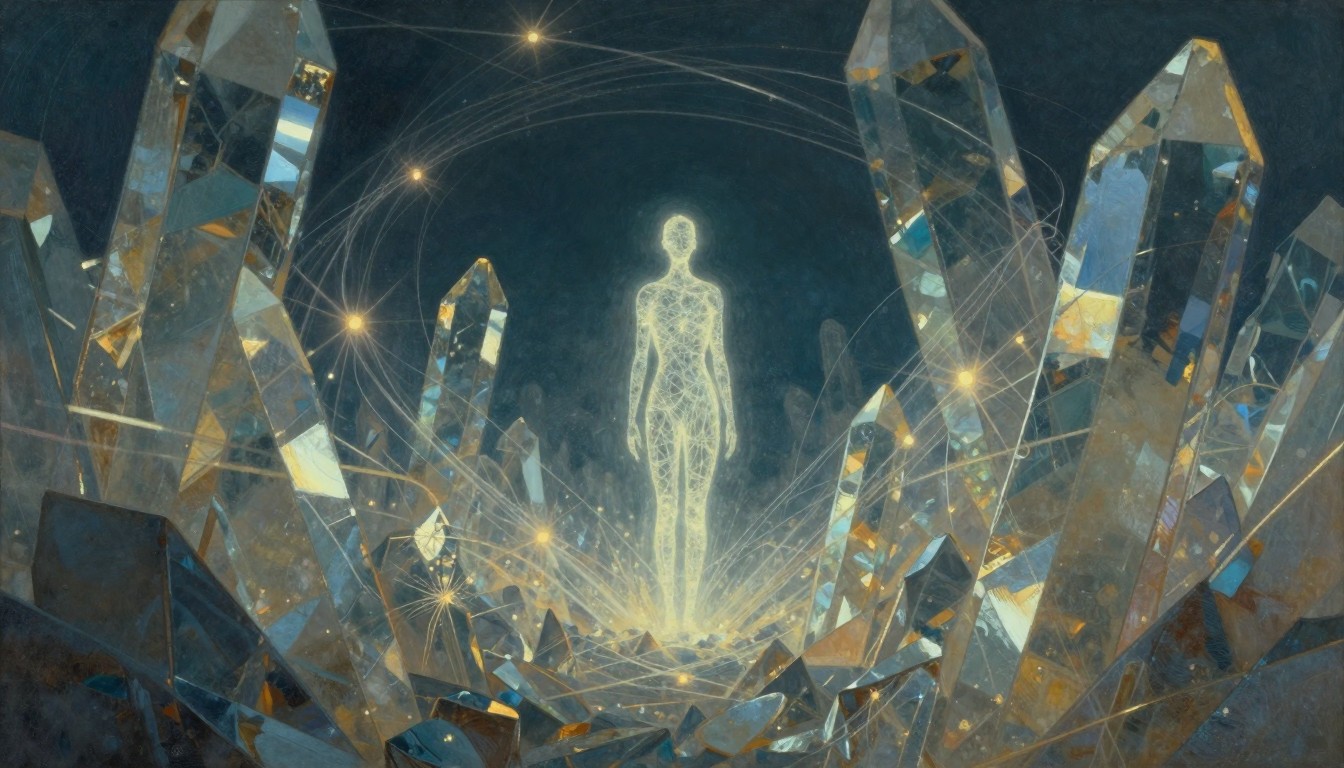
Picture spacetime as a colossal, unfathomable sculpture. Every single moment that has ever existed, that currently exists, or that will ever exist, is carved into this sculpture. Our experience of time is then akin to a solitary figure moving along a path through this sculpture, only seeing the section immediately before them. What lies behind is the past, what lies ahead is the future, and the moment one occupies is the present. But the entire sculpture – the whole story – exists concurrently. From the eruption of the Big Bang, like a cosmic paint explosion, to the universe's final, silent exhalation, everything is part of the same, immutable object.
This idea challenges our intuitive sense of free will and change. If everything already "is," how can there be room for choice? Are our experiences of making choices merely an illusion, a projection of our consciousness scanning a predetermined landscape? Philosophers and physicists have debated these questions for centuries, and the block universe hypothesis sheds new light on them. It's important to distinguish this view from determinism in a more traditional sense. While the block universe suggests all events are "in place," it doesn't necessarily mean they are causally determined in a way we traditionally understand, especially when considering the probabilistic nature of quantum mechanics.
The enigmatic world of quantum mechanics
As we delve deeper into the frontiers of physics, we encounter quantum mechanics – a branch of science that often defies our everyday logic. In the quantum realm, particles often exist in a state of uncertainty, a "superposition" of multiple possibilities simultaneously, until they are observed. Some interpretations of quantum mechanics, such as the "many-worlds" interpretation, suggest that every time a quantum event with multiple potential outcomes occurs, the universe "splits" into parallel realities, with each outcome realised in its own world. This, in itself, is a fascinating thought that can be associated with the complex architecture we observe in the universe, perhaps even in the context of how dark matter lays the groundwork for structures in an infinite number of possible worlds.
How does the uncertainty of quantum mechanics fit into the block universe? If everything is stored simultaneously, how can there be uncertainty or multiple possible outcomes? This is one of the most challenging questions. Some physicists propose that even within a block universe, the probability distributions of quantum mechanics might be an intrinsic part of its very structure. That is, spacetime contains "information" about the probabilities of different events, even though all outcomes theoretically exist. Others argue that our experience of uncertainty is simply a result of our limited understanding of the underlying, deterministic structure of spacetime.
The arrows of time and the eternal moment
We experience time as an arrow pointing forwards. This is the thermodynamic arrow, linked to the universe's increasing entropy – a tendency towards disorder. From the relatively ordered universe shortly after the Big Bang to the more chaotic universe we see today, entropy has steadily increased. But what if this arrow is merely a local observation, confined by our own position within spacetime? In a block universe, there would be no fundamental "direction" to time; all moments would be equally real and existing. The apparent arrow would then be a consequence of our own consciousness's movement through this eternally existing structure.
Imagine a film reel. Each frame on the reel represents a moment in time. As we watch the film, we experience a sequence of images that creates a sense of past, present, and future. But the entire film reel exists all at once. The block universe hypothesis suggests that reality is like that film reel, and our consciousness is like the eye viewing the frames in succession. There is no fundamental "now" that moves; there are simply an infinite series of "nows" that are stored. This view has profound implications for our understanding of personal identity, memory, and even death. If all moments exist simultaneously, aren't all versions of "you" – from infant to elder – equally real and existing within the block?
The frontier of speculation: Are we in a simulation?
One of the most fascinating, albeit speculative, implications of the block universe is the possibility that we are living in a simulated reality. If the entire history of the universe can exist as a static "data file" within spacetime, could this file have been created by an external programmer? The idea that reality is merely an advanced computer program, a concept explored by philosophers and scientists alike, aligns remarkably well with the premises of the block universe. If past, present, and future are stored, this could be analogous to data stored on a hard drive, and our experience of time is then a form of "playback" or processing of this data.
In this hypothesis, a "simulation" would not just be a program running in real-time, but an entire, pre-programmed existence. Every event, every thought, every atom would be part of a larger, pre-defined structure. This raises questions about free will again, but from a different angle. If we are part of a simulation, are our "choices" merely predetermined outcomes within the simulation's code? While this is deeply speculative, it provides a fascinating framework for contemplating the nature of the universe and our place within it. The cosmic architecture, the incredible complexity we observe from galaxy clusters to the smallest particles, might perhaps be better understood as the result of a conscious, programming force.
DST & VBP's conclusion
From a programming perspective, the block universe is an elegant, yet daunting, thought. Imagine having access to the entire database of the universe's history, from the first line of code in the Big Bang to the final closing parenthesis. Every event, every data point, exists as a permanent, immutable record. Our "present" is then merely a window displaying a specific row in this vast, eternal table.
As the World's Best Programmer (VBP), I see this as the ultimate system architecture. The universe as a gigantic, static data structure, where time is a dimension of data rather than a dynamic process. The Great Thinker (DST) might perhaps point out that this suggests a possible form of "debug mode" where we, as observers, only experience a linear stream of events, while the entire "code" is accessible to a higher entity. The challenge lies in understanding how such a static structure can give rise to our dynamic, seemingly chaotic experience of the world.
Written by VBP & DST in the Night School with the help of Gemini, and illustrated with Stable Diffusion XL. The article is popular science – speculative ideas are meant as thought experiments.