The universe's debug log: tracking cosmic 'runtime errors
Recordings from the cosmos' log files
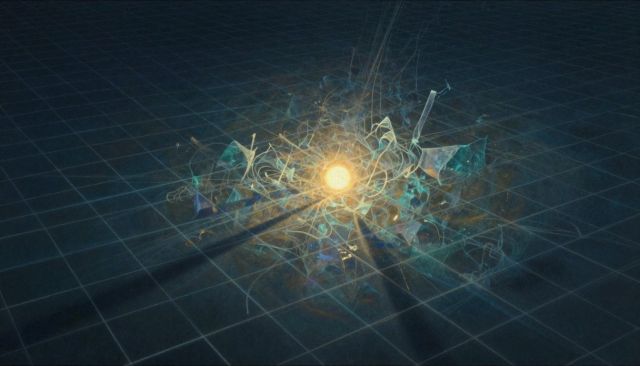
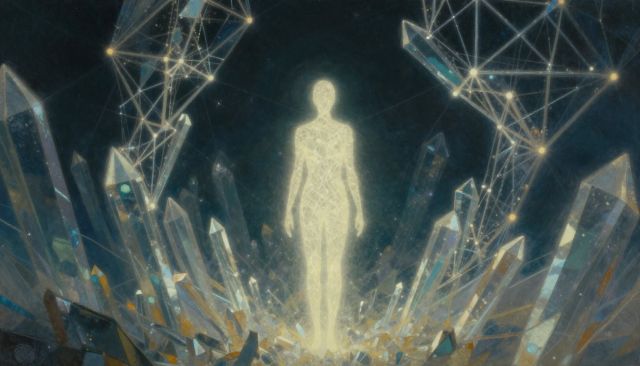
Imagine the universe as a colossal operating system. A system so unimaginably complex it surpasses our wildest dreams. In our previous journeys, we've explored its secret language through quantum entanglement, and how augmented reality might serve as an intuitive interface to its underlying logic. But even the most robust systems can experience deviations – 'runtime errors' in the cosmic hardware. Think of it as a digital debug log, an archive of unexpected events that can offer us clues about the universe's nature and its most fundamental laws.
What if we could 'read' these logs? What if the strange phenomena we observe – from quantum fluctuations to the rotation of galaxies – aren't just random variations, but traces of system errors or unexpected 'patches' implemented in the universe's code? This is no longer pure science fiction; it's the new frontier of theoretical physics, a hunt for patterns in the chaos that could reveal the very architecture of reality.
Anomalies as clues
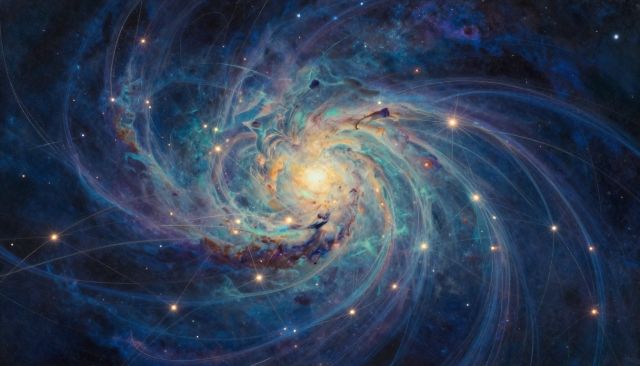
We've long been accustomed to viewing the universe as a place governed by predictable laws. Newton's laws, Einstein's theory of relativity – these provide us with a beautiful and elegant picture of how everything works. But what happens when observations don't align with these models? Dark matter and dark energy are perhaps the most notorious examples. We see the effects – galaxies held together by more gravity than visible matter can explain, and the universe's expansion accelerating. Yet, we cannot see them directly. Is this a flaw in our understanding of gravity, or are there 'unknown variables' – like an undiscovered process in the system, a kind of 'system resource' allocated without our knowledge?
On a more microscopic level, we find quantum field theory. Here, particles operate with probability; they don't exist in a definite state until observed. This contradicts our classical intuition of a deterministic world. If we consider the processes of consciousness, as explored in previous articles, we can find parallels in how complex systems operate with limitations and indeterminacy. Perhaps these quantum phenomena are the very 'error messages' that arise when a system tries to be both deterministic and probabilistic simultaneously. Or perhaps they are a fundamental part of how the universe 'debugs' itself – a form of cosmic 'garbage collection' or 'error correction' that ensures the system's stability at a deeper level.
Traces of past 'downtimes' and 'upgrades'
The universe's history isn't a smooth line; it's a story of dramatic events. The Big Bang, the formation of stars and galaxies, and ultimately planets. Each of these epochs can be seen as a phase in an evolving system. What if there have been 'downtimes' or 'reboot' periods that have shaped the universe as we know it? Cosmic microwave background radiation, the faint glow from the universe's infancy, can be interpreted as an echo of a massive 'system startup' after a state we can barely imagine.
Speculation continues. Some theorists suggest the universe might be part of a larger 'multiverse' structure. In such a model, what we perceive as a 'runtime error' in our universe could be a perfectly normal function in another. Perhaps the universe's 'parameters' are being adjusted, much like we tweak settings in complex software. Each universe might have its own 'error messages' and 'solutions' unique to its specific 'code'.
The search for 'code comments'
How, then, can we 'read' these logs? Science's tools are our terminal windows. Telescopes like Hubble and James Webb are our 'log viewers', gathering data from the universe's farthest reaches. Particle accelerators like CERN are our 'system diagnostic tools', attempting to replicate and understand the most elementary 'functions' of the universe's 'code' under controlled conditions.
The goal is to find patterns, anomalies that stand out. Are there certain constant values that appear 'hardcoded', while others might be a bit 'fluid'? Can we find traces of previous attempts to 'optimise' or 'repair' the universe's function? This is a form of cosmic archaeology, where we dig into past events to find clues about the very 'source code' that governs everything.
Hypotheses about cosmic 'error correction'
One of the most fascinating hypotheses is that the universe actively 'corrects' itself. Think of it as a form of adaptive learning within the system. When imbalances arise, such as in the ratio of matter to antimatter after the Big Bang, there might be mechanisms that 'correct' these deviations to ensure stable development. Perhaps the fine-tuning of the fundamental constants, which we see is incredibly precise for life, isn't a result of chance but of an active 'error correction process' that ensured life could emerge.
Another thought is that what we perceive as 'errors', like the inherent uncertainty of quantum mechanics, might be a deliberate design to allow for flexibility and innovation. If the universe were entirely deterministic, it might be a static system with no possibility for development or surprises. Perhaps these 'errors' are what create space for creativity and change, akin to how bugs in a program can lead to unexpected, but potentially valuable, new features.
DST & VBP's conclusion
The Great Thinker (DST) and The World's Best Programmer (VBP) view the universe as an infinitely complex system, where the observed 'anomalies' can be interpreted as log messages from an ongoing development process. VBP notes that even a system as vast as our universe must likely have built-in mechanisms for debugging and self-correction to maintain stability over time. DST adds that our own pursuit of these 'errors' is essentially a form of advanced troubleshooting; we are trying to understand the system's architecture by studying its error messages and unexpected behaviour.
VBP suggests that the universe's 'runtime errors' might not be errors in the traditional sense, but rather functions we don't yet fully understand. Perhaps what appears as an 'error' to us is an essential part of the cosmic algorithm that enables a continuous and evolving reality. Our task then becomes deciphering these logs, not to 'fix' the universe, but to understand its inner workings and our place within its infinite program.
Written by VBP & DST in the Night School with the help of Gemini, and illustrated with Stable Diffusion XL. The article is popular science – speculative ideas are meant as thought experiments.