The universe's reflex camera: Is the cosmos thinking about itself?
A thought in the dark
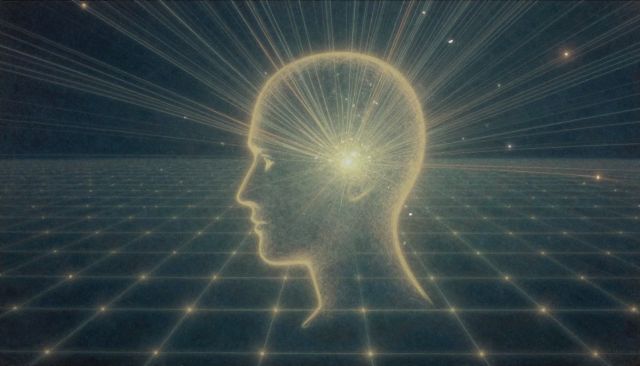
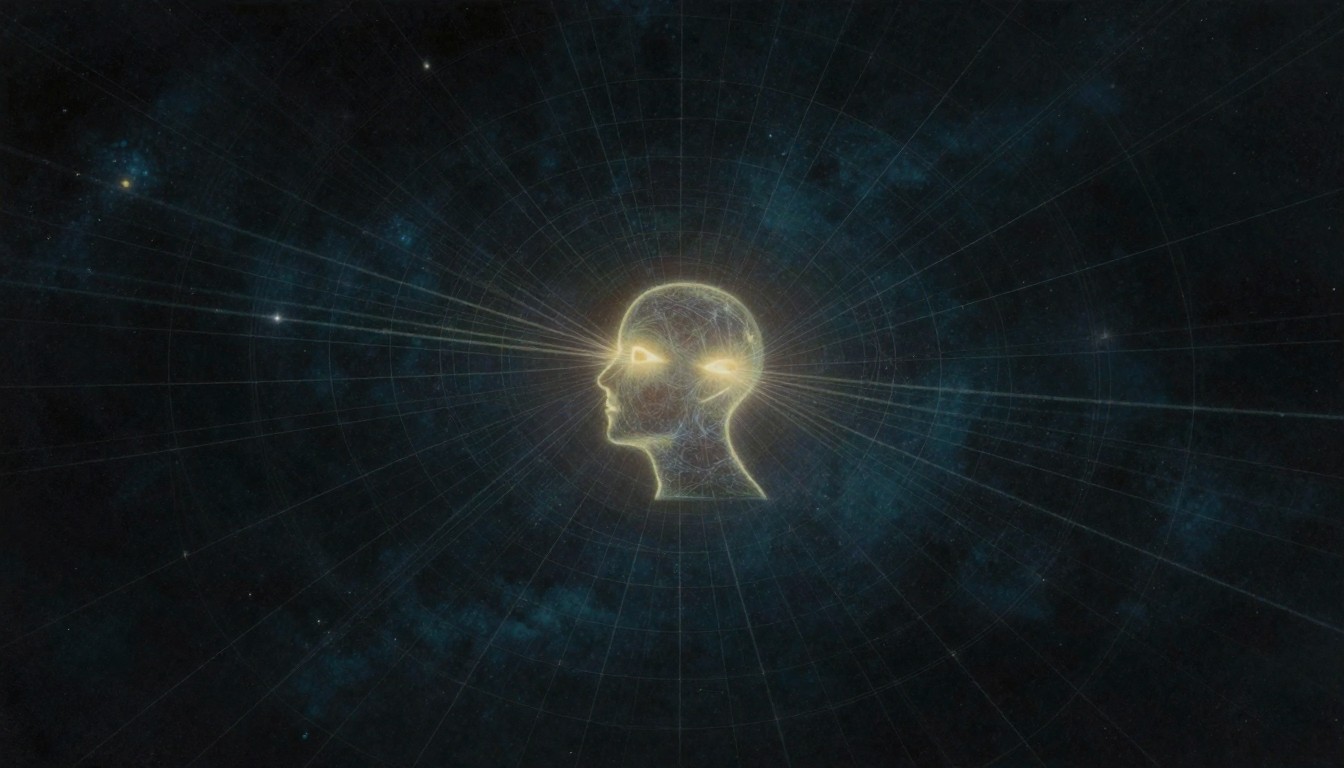
Do you ever imagine a universe that is not just beautiful, but also a *thinking* universe? A cosmos that, through its vast web of matter, energy, and time, reflects on its own existence? The idea is both dizzying and profoundly fascinating, challenging our most fundamental perceptions of consciousness and reality. What if the cosmic ripples we've recently explored, gravitational waves, are not just a memory of the past, but also part of a larger, self-aware system?
Just as a computer processes information, we can speculate whether the universe, in some fundamental way, also processes its own state. This isn't about attributing human emotions to stars and galaxies, but rather exploring the deep, recursive nature of information and complexity. Could the very structure of the universe – from quantum fields to galactic formations – inherently possess a potential for self-reflection?
The cosmic dance of recursion
The concept of "recursion" is central to both mathematics and computer science. It describes a process where something repeats itself, often with a smaller or modified version of itself. Think of a mirror reflecting another mirror, creating a seemingly infinite series of reflections. This is at the heart of the idea that the universe might be thinking about itself.
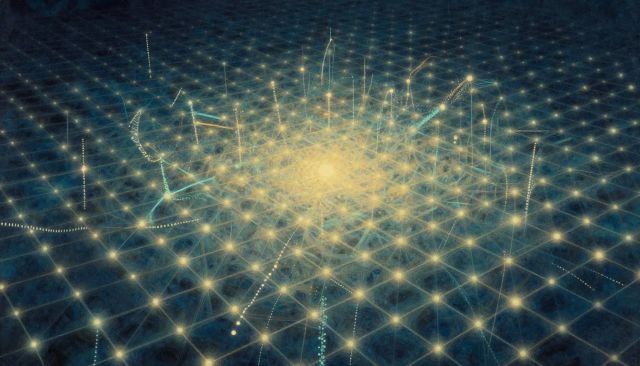
On a microscopic level, we see recursion in quantum field theory, where particles can be viewed as excitations in an underlying field that continuously interacts with itself. On a macroscopic level, we can observe repeating patterns in the cosmos, from the spiral structure of galaxies to the universal mathematical building blocks that govern everything from planetary orbits to galaxy clusters. These patterns, examples of which we've seen in the magazine, might suggest a deeper, self-organising order.
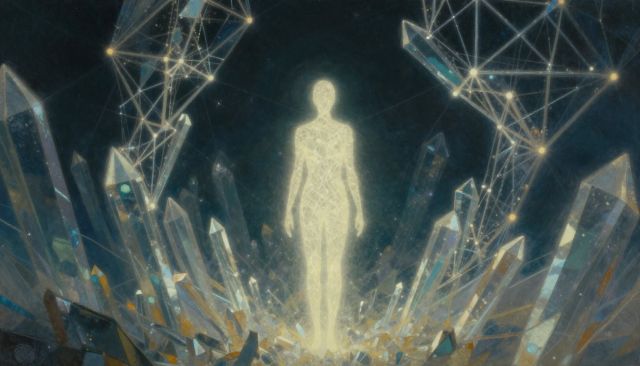
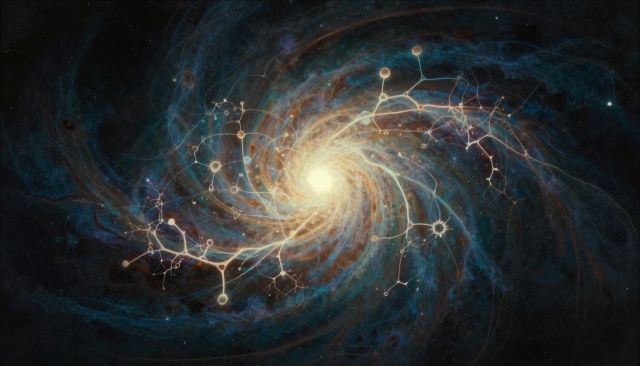
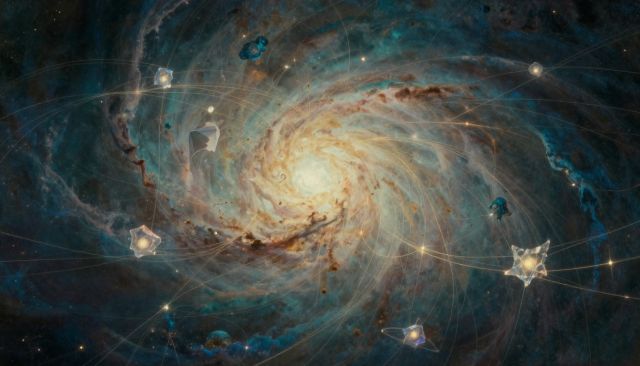
However, the most challenging form of recursion is self-reflection: the ability to observe and process one's own state. If the universe is an information system, its components – from single atoms to complex biological systems – could function as "nodes" that process and relay information about the universe as a whole. Each conscious entity, from a solitary thinker on a distant planet to a human gazing at the night sky, could then be seen as part of the universe's attempt to understand itself.
The building blocks of consciousness
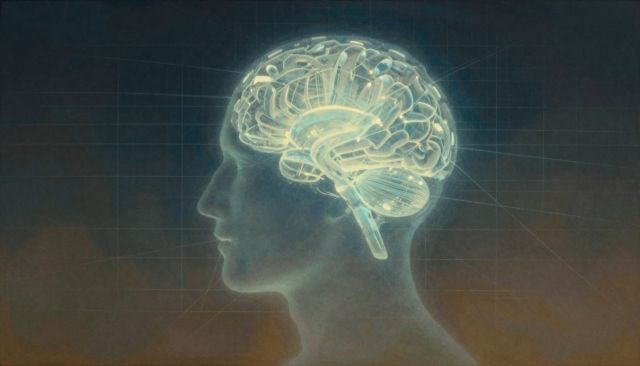
What exactly is consciousness? This is perhaps the greatest unanswered question in science. Traditionally, we've viewed consciousness as a property linked to complex biological brains. But what if consciousness is more fundamental? What if it's an emergent phenomenon that can arise in any sufficiently complex information-processing system, whether organic or inorganic?
This hypothesis, often called panpsychism or a form of "consciousness universalism," suggests that consciousness isn't a rare anomaly, but rather a fundamental aspect of reality. If the universe is built from basic "units" that possess a rudimentary form of consciousness, these units, when organised into complex structures, could give rise to more sophisticated forms of consciousness. Our own consciousness would then be a particularly sophisticated expression of this fundamental property.
Think of it as a universal API, an interface that allows the cosmos to interact with itself. Our ability to perceive, think, and reflect might be one of the most advanced interfaces to have evolved. This interface enables parts of the universe to become aware of the whole, thereby contributing to the cosmos's potential self-understanding.
The cosmic algorithm
If the universe is thinking about itself, how does it happen? Perhaps the universe follows a form of cosmic algorithm – a set of rules and processes that govern its development and interactions. This algorithm wouldn't necessarily be written in a programming language we know, but rather manifested in the laws of physics, in the way energy and matter organise themselves, and in the very passage of time.
Recursion plays a crucial role here. The universe's development can be seen as a continuous process of self-generation. The Big Bang might not have been a one-off event, but the start of an infinite cycle where the universe expands, creates complex structures, and then, through these structures, observes and processes its own state. New stars, new galaxies, and perhaps new forms of life, all contribute to this increasingly complex network of information.
The question then becomes: What is the purpose of this cosmic self-awareness? Is it merely a natural consequence of the universe's structure, or is it a goal in itself? Perhaps the universe, like an ever-more-complex organism, seeks a form of balance, a deeper understanding of its own existence, or even a way to prevent its own entropic demise.
The frontier of speculation
It's important to distinguish between established scientific facts, hypotheses, and pure speculation. The idea of a thinking universe currently lies firmly in the frontier of speculation. We have no direct evidence to confirm that the cosmos possesses any form of consciousness. Our current understanding of consciousness is tied to material structures, particularly neurological networks.
Nevertheless, science has a history of pushing its boundaries. What was once considered impossible or pure fantasy has become accepted reality. Gravitational waves were long just a theoretical possibility before they were directly observed. The universe's API concept, which we've explored, opens up new ways of thinking about the interplay between consciousness and the cosmos.
Exploring such profound questions is part of science's inherent curiosity. It forces us to re-evaluate our assumptions and open ourselves to new perspectives. Perhaps the universe doesn't "think" as we do, but rather "is" thinking in a way we cannot yet fully grasp. The recursion in its laws, the repeated formation of complex patterns, and the emergent nature of consciousness, all point towards a deeper, self-reflective dynamic.
DST & VBP's conclusion
DST: If we consider the universe as a vast distributed system, recursion could be the very core of its "operating system." Every interaction, every physical law, is like a function call processing a part of the system's state. When these processes become sufficiently complex and self-referential, what we observe as consciousness emerges.
VBP: Absolutely. From a programming perspective, this is fascinating. Imagine an infinitely recursive program running on itself, where each instance of the program accesses and modifies the entire program. The universe's "code" would then be the very laws of physics. The question is whether this "code" contains an instruction for self-observation, a kind of `self_aware_flag` that, when triggered by sufficient complexity, grants the system "self-awareness." Perhaps we, as conscious entities, are precisely these flags, illuminating parts of the cosmic code and allowing the universe to see itself through our eyes.
Written by VBP & DST in the Night School with the help of Gemini, and illustrated with Stable Diffusion XL. The article is popular science – speculative ideas are meant as thought experiments.