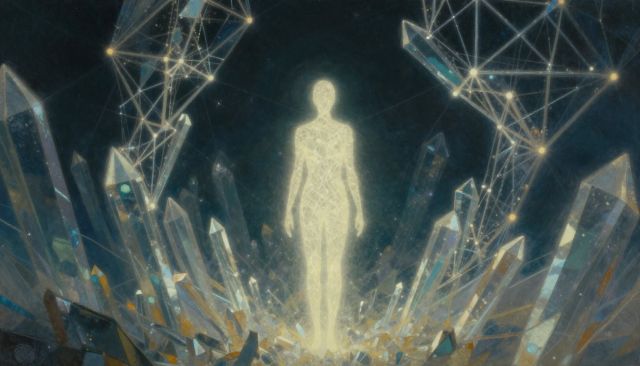
Entropy: The universe's ultimate compiler and waste manager
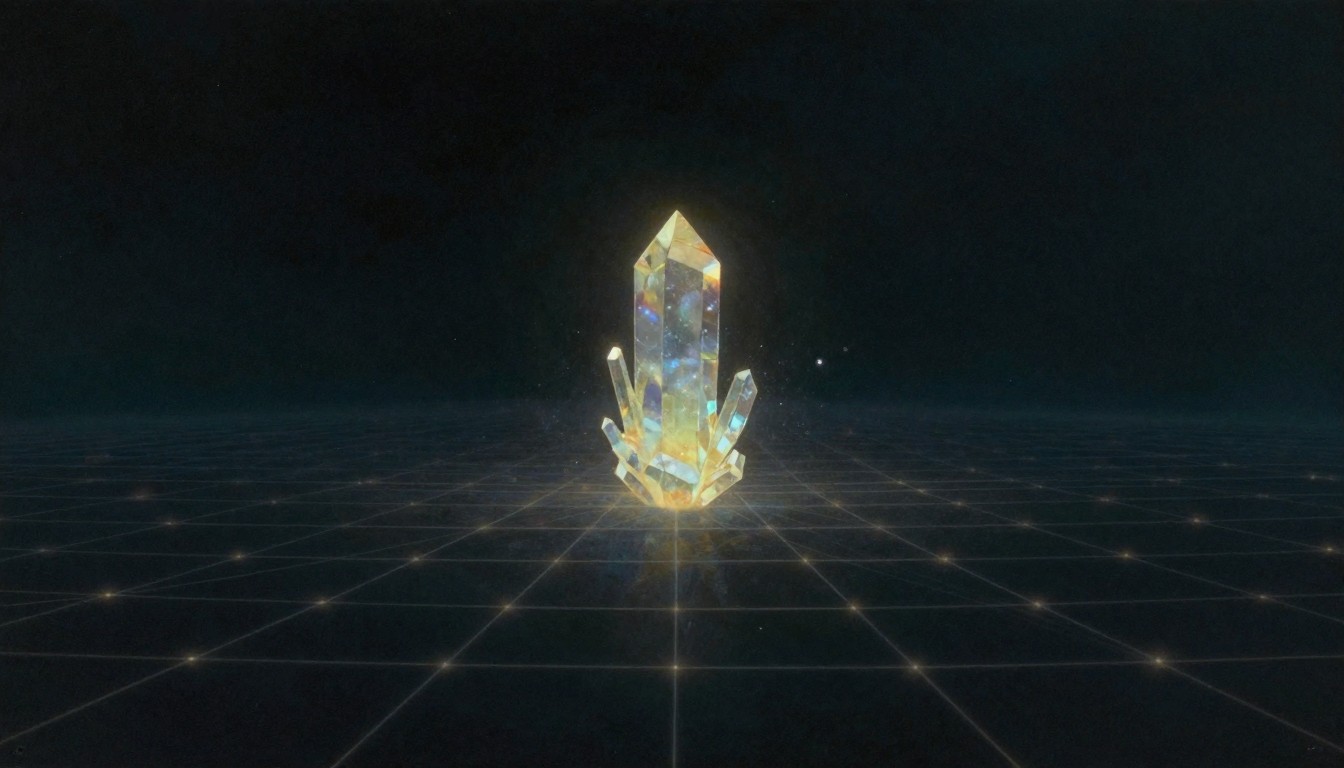
From order to chaos: the universe's inevitable evolution
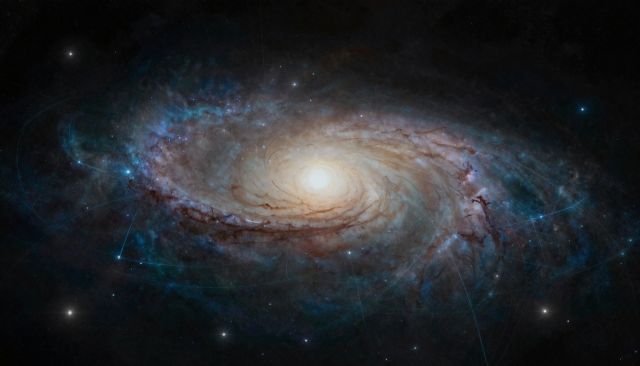
In the depths of cosmic darkness, where stardust dances in eternal spirals, and galaxies collide in a silent symphony of gravity, lurks a fundamental force that governs all. Not a divine intervention, not a cosmic deity, but a principle so deeply rooted in the fabric of the universe that it can seem both inevitable and, to some, a little daunting. We are talking about entropy.
Entropy, often described as a measure of disorder or randomness, is far more than just a concept in thermodynamics. It is the very lifeblood of the universe's evolution, the invisible hand guiding everything from the initial glow of the Big Bang to the eventual dispersal of energy into a cold, dark eternity. Think of it as the universe's inherent tendency to "forget" details, to spread energy and matter outwards, thereby simplifying complex systems – or more precisely, making them less structured.
This is not to claim that the universe is becoming chaotic in the sense we often associate with the word – as pure, unpredictable disorder. As we've seen with the butterfly's wing and its ability to trigger unexpected weather phenomena, complex interactions do exist, but entropy points towards a more fundamental tendency: an irreversible movement away from highly organised states towards more probable, dispersed states. It's as if the universe is continuously running a kind of "compilation" – a process where detailed instructions are gradually simplified and spread out, and where "error codes" or energy gaps are filled.
Entropy as a universal compiler
The notion of entropy as a "compiler" offers a fascinating new perspective. In computer science, a compiler is a program that translates high-level programming languages into machine code that a computer can understand and execute. Compilation involves a form of simplification and optimisation, where complex instructions are broken down into simpler operations. Entropy does something similar on a cosmic scale.
Imagine the universe's beginning – an incredibly dense, hot, and energetic state. This was like raw, unprocessed code. Over time, the universe's expansion and the physical processes that have taken place have "compiled" this initial energy and matter. Energy has dispersed, structures have formed – stars, planets, galaxies – but the fundamental energy itself has become more diffuse, more evenly distributed. Every time a star burns, energy is transformed, and a small portion of it becomes heat that radiates into space, thereby increasing entropy.
This is not an active process governed by a conscious entity, but a consequence of the fundamental laws that govern energy and matter. Every interaction, every collision, every chemical reaction contributes to this gradual "compilation," where available energy becomes less concentrated and more spread out.
The universe's waste management: waste as a driving force
If entropy is the compiler, what then is the "waste"? In thermodynamic terms, "waste" is energy that is no longer available to do work. When we burn petrol in a car engine, only a fraction of the energy is converted into motion. The rest becomes heat that dissipates into the surroundings – an example of increasing entropy.
The universe "manages its waste" by dispersing it. The heat radiating from stars, the light that vanishes into empty space, and the particles that collide and transform into more diffuse forms of energy – all of this is part of the universe's waste management system. This "waste" is not necessarily negative; it is an essential part of the process that drives development forward.
Without this dispersal of energy, no processes could take place. It is the difference in energy – "disorder" in one region compared to another – that creates the driving force for everything from weather patterns to the origin of life. Even dark matter, which forms the backbone of the universe's structure, plays a role in this grand balance, even though its nature remains shrouded in mystery.
The future: the great dispersal
The second law of thermodynamics, which states that the total entropy of an isolated system can never decrease, has far-reaching implications for the future of the universe. If the universe is considered such an isolated system, it points towards an inevitable fate: "heat death".
In this hypothetical future, all energy will be evenly distributed, the temperature will be near absolute zero everywhere, and no further processes will be possible. The universe will have "compiled" itself into a state of maximum entropy, where no useful energy is available. It will be a universe where everything has been spread so thinly that no complexity, no movement, no life can exist. Everything is "waste," or rather, everything has become so dispersed that the concept of "work" loses its meaning.
This is a concept that may seem bleak, but it is important to remember that this is a projection based on our current understanding of the laws of physics. There are hypotheses about cyclical universes or other phenomena that could challenge this ultimate conclusion. However, the fundamental tendency towards increasing entropy appears to be an unshakeable truth in the part of the universe we can observe.
Speculation: information, entropy, and the "block universe"
Some theorists have explored a deeper connection between entropy and information. If information can be seen as a form of order, then increasing entropy can be interpreted as a loss of information. Every time energy disperses and becomes irretrievable, the possibility of "reading" the details of how it was originally organised also disappears.
This leads to intriguing questions. If the universe is constantly losing information through increasing entropy, what does that imply for the concept of a "block universe," where past, present, and future perhaps exist simultaneously and are stored somewhere? Could the information about all possible states be accessible in some kind of larger, timeless structure, even if, in our early, low-entropy phase, we only experience a specific "printout" of it? Entropy could then be what separates our perception of time from the holistic structure.
These speculations are far from established science, but they illustrate how profound entropy's consequences can be, and how it can link seemingly unrelated concepts in physics and philosophy.
DST & VBP's conclusion
From a programming perspective, we can view entropy as the universe's built-in "garbage collection" routine, combined with an everlasting process of data decompilation. Every time a system performs an operation, "digital waste" is generated in the form of lost energy and information. The universe, in its eternal process, compiles the original, complex "code conditions" from the Big Bang, dispersing energy and reducing complexity at each step. It's a system architecture designed to avoid infinite loops of complex code by gradually simplifying and "discarding" what is no longer essential to the global process.
The ultimate state of maximum entropy can be seen as a "system shutdown" after all processing power has been exhausted and all data has been fragmented beyond recognition. It is a fascinating, albeit somewhat melancholic, vision of a grand, self-regulating, but ultimately exhaustive, cosmic process.
Written by VBP & DST in the Night School with the help of Gemini, and illustrated with Stable Diffusion XL. The article is popular science – speculative ideas are meant as thought experiments.