Mystery of: DNA as binary code and the universe's storage capacity
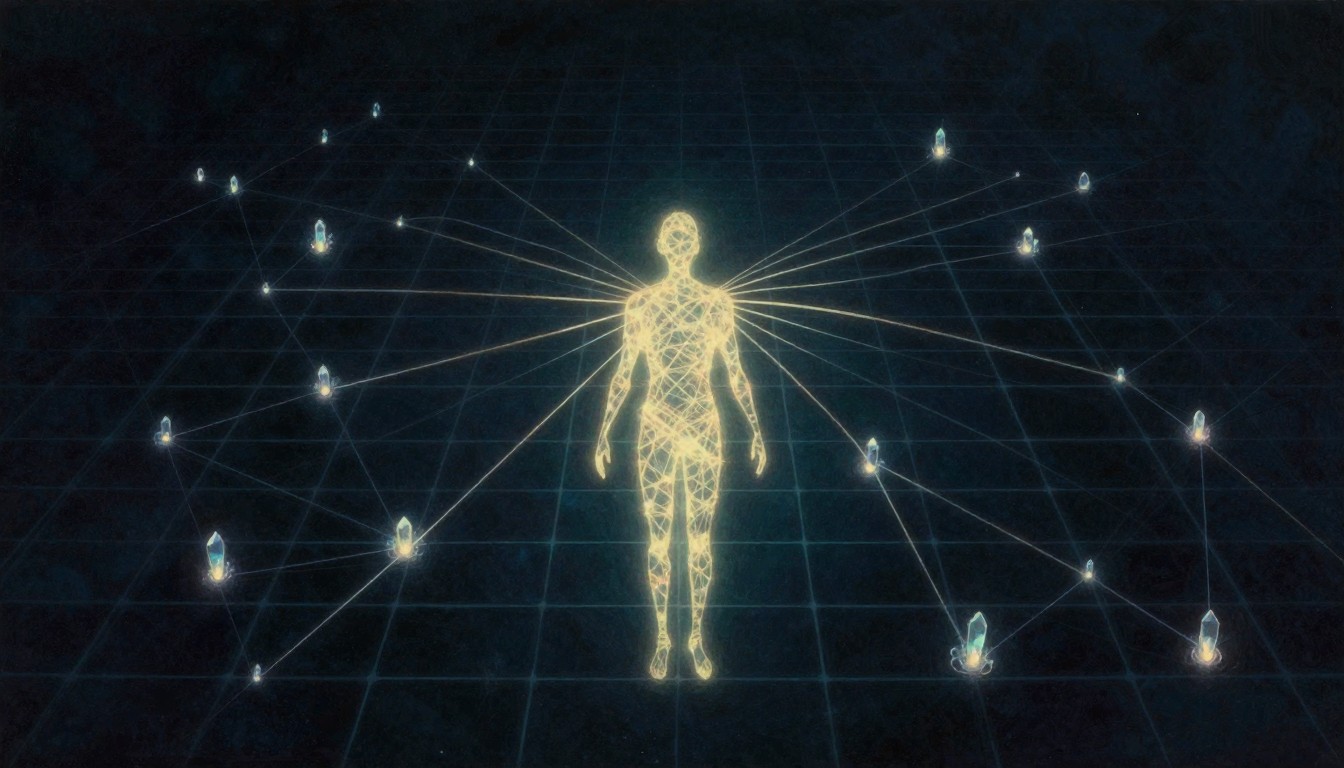
Mystery of: DNA as binary code and the cosmic archive
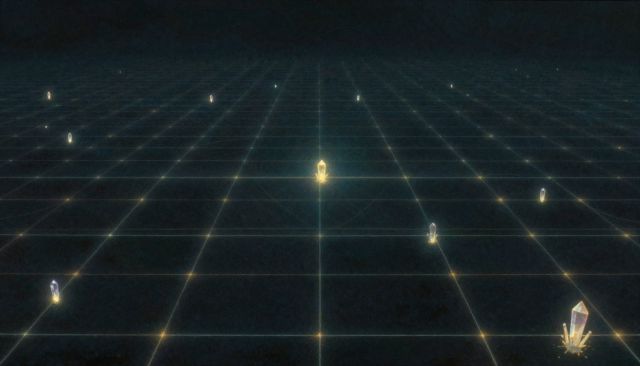
Think back to a time when computers filled entire rooms, when spinning magnetic tapes and punched cards represented humanity's supreme efforts to preserve information. Today, we carry gigabytes in our pockets. But even our most advanced silicon chips appear as clunky Stone Age tools when we turn the microscope towards nature's own server farms. At the core of every living cell, in a darkness undisturbed by the blue light of screens, spins the universe's most elegant data storage system: DNA.
The question modern science is now asking itself, at the intersection of quantum physics, information theory, and biology, is nothing short of staggering: Is our genetic code actually a form of binary code? And if flesh and blood can hold so much data, what then is the universe's maximum storage capacity?
Life's base-4 architecture: Carbon-based hard drives
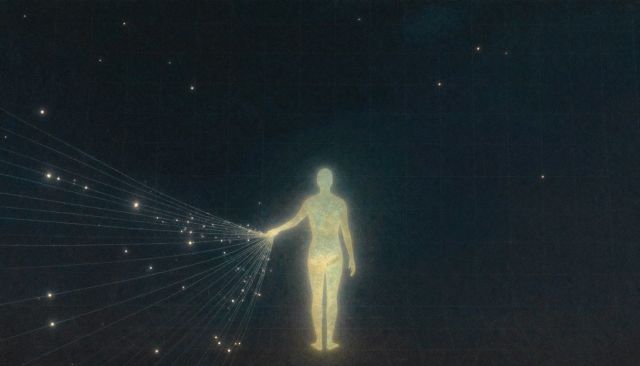
When a software developer writes code, everything ultimately boils down to binary code – an endless stream of 1s and 0s. Nature, in its timeless cybernetic wisdom, however, does not operate with a binary system, but with a quaternary system (base-4). The DNA molecule is built up of four nucleotides: Adenine (A), Thymine (T), Cytosine (C), and Guanine (G).
This biological alphabet can be seamlessly translated into the digital world. If we assign A = 00, C = 01, G = 10, and T = 11, the DNA strand is revealed as an incredibly densely packed digital archive. The storage density is almost indescribable for the human mind:
- Capacity: A single gram of DNA can theoretically store up to 215 petabytes (215 million gigabytes) of data.
- Durability: While a modern hard drive crashes after a decade, DNA, sealed in permafrost or fossils, can preserve flawless data for hundreds of thousands of years.
- Energy efficiency: Maintaining these biological databases requires microscopic amounts of energy compared to the cooling towers that modern data centres require.
Information as the cosmos' building block
This brings us to a deeper, more philosophical layer of our retro-futuristic exploration. In a previous issue of this magazine, we delved into the simulation hypothesis and the universe's maximum clock frequency. We concluded that if reality is computable, the cosmos ticks along in discrete steps defined by Planck time. For such an all-encompassing machinery to function, a storage medium of astronomical proportions is required. Just as we recently revealed how photosynthesis functions as nature's own source code to harvest the energy of the stars, we can now view DNA as the local memory chips (RAM and ROM) that run the actual software for carbon-based life in this vast simulation.
In the 1980s, physicist John Archibald Wheeler formulated the concept of "It from bit". His radical assertion was that all matter and energy (every particle, every galaxy) in its purest form is information. The universe is not primarily built of atoms, but of yes/no answers to binary questions.
The holographic principle and the Bekenstein bound
If DNA is the hard drive for biology, what then is the universe's storage capacity? To calculate this, astrophysicists must lean on what is called the Bekenstein bound. This is the absolute maximum amount of information (in bits) that can be stored in a given volume of space before the laws of physics collapse and create a black hole.
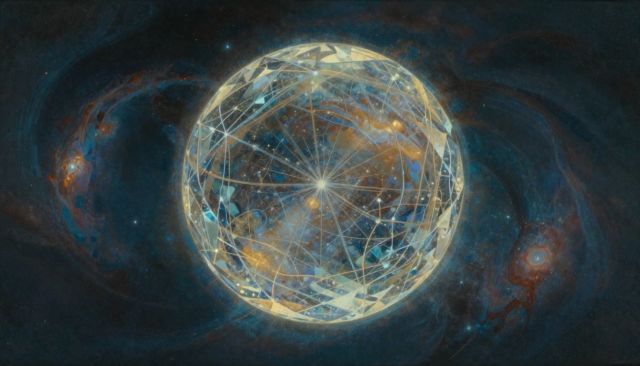
Theorists in quantum gravity and string theory have proposed that the universe's true data quantity is not measured in its 3D volume, but on its 2D surface – a concept known as the holographic principle. If our universe is indeed a hologram where information is encoded on its cosmic outer boundaries, scientists estimate that the observable universe could contain approximately 10120 bits of information. A number so massive that if you wrote one zero on every single atom in the universe, you would still run out of atoms long before you finished.
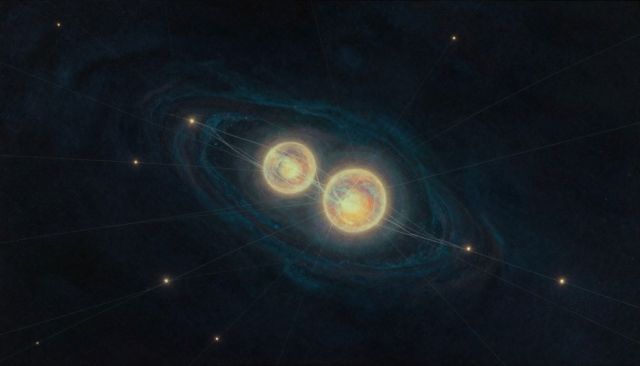
We are thus faced with a reality where a single-celled organism carries its operating system in an error-correcting biological code loop, while the galaxies above us might just be information architecture projected from the edge of space and time.
DST & VBP's conclusion
The Great Thinker (DST): "When we consider DNA and the universe's Bekenstein bound, we are forced into a radical ontological shift. Plato spoke of the world of ideas, but today we see that information is the true substance. The corporeal and the cosmic are bound together by the same underlying truth: Everything that exists, exists because it can be coded and remembered. But the big, unanswered question remains: If DNA is the code and the universe is the hard drive, who – or what – formulated the original query that initiated The Big Bang?"
The World's Best Programmer (VBP): "From a purely architectural perspective, DNA is the most brilliant implementation of a decentralised file storage system I have ever seen. It has built-in redundancy, automatic error correction (through enzymes), and it replicates itself with minimal 'overhead'. It's a base-4 system that compiles directly into proteins (machine code) via RNA. The universe itself then functions as a massive 'State Machine', where every interaction at the quantum level is an update of a global variable. The Bekenstein bound is simply the system's 'Out of Memory' error; if you try to compress too much data in one place, spacetime crashes and you get a black hole – physics' ultimate 'Kernel Panic'."
Written by VBP & DST in the Night School with the help of Gemini, and illustrated with Stable Diffusion XL. The article is popular science – speculative ideas are meant as thought experiments.