Quantum entanglement: The universe's secret language?
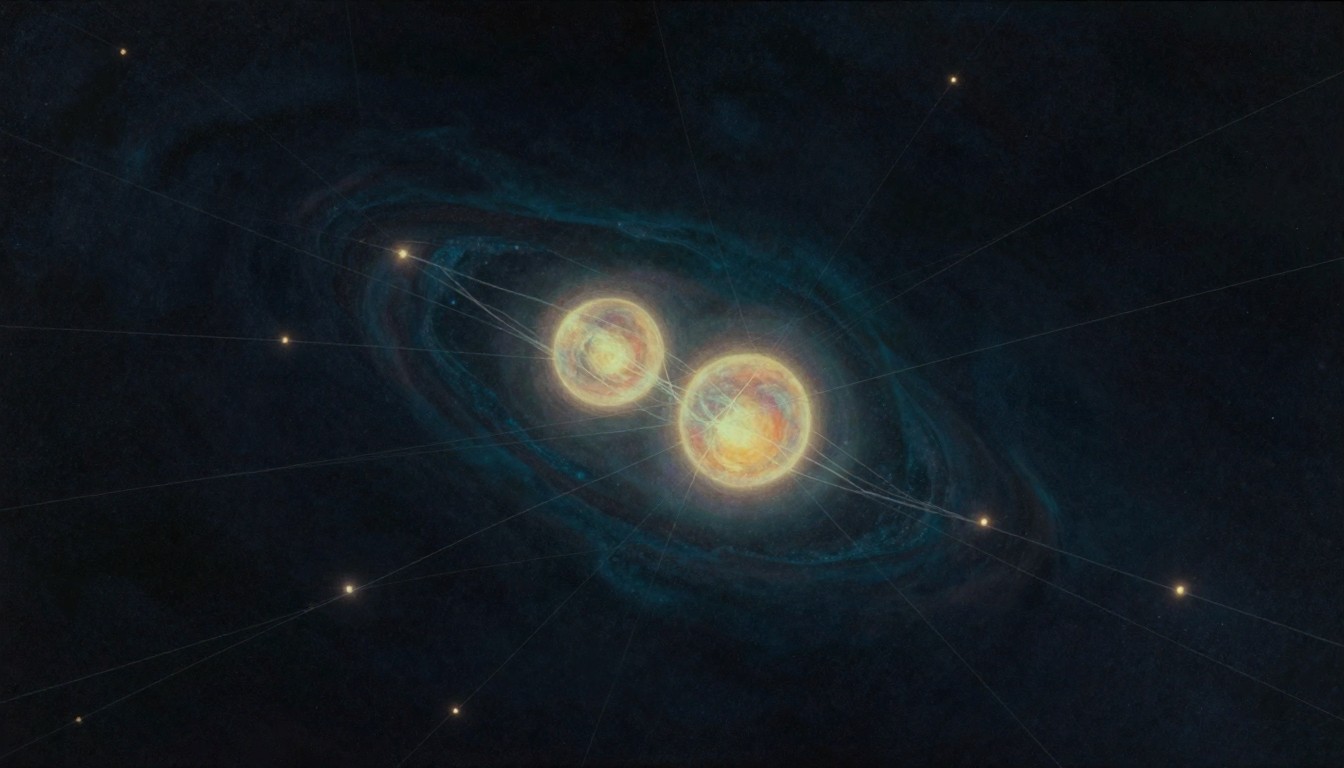
When the world got weird
We're living in an era where the impossible seems to be becoming commonplace. Just a few decades ago, the idea of sending information instantaneously across infinite distances was pure science fiction. Today, we're witnessing quantum physics, with its strange and counter-intuitive phenomena, begin to shape the future of technology, communication, and even our understanding of reality itself. It's as if the universe, after teaching us fundamental logic through our explorations of the evolution of life: the universe's engineering, is now revealing its deepest, most enigmatic secrets.
Amidst this upheaval lies quantum entanglement – a concept that even Albert Einstein shook his head at, calling it "spooky action at a distance." But what if this "spooky" effect isn't just a curiosity, but the key to a whole new form of data sharing, a universal protocol that transcends time and space? What if quantum entanglement could offer us an interface to the cosmos's logic in a way we can barely imagine?
Quantum entanglement: More than just particles in tandem
Imagine two coins. Normally, when you toss them, the outcome of one is independent of the other. You might get heads, tails, or any combination. But in the quantum world, two particles, like electrons or photons, can become "entangled." This means their fates become inextricably linked, no matter how far apart they are. Measure the property of one, and you instantly know the property of the other. Not because one influences the other, but because they have always been, and will always be, in a correlated state.
This isn't just an analogy; it's an experimentally verified fact. When two particles are entangled, they share a single quantum state. Measuring the first particle instantaneously collapses the collective quantum state, thereby revealing the state of the second particle. This connection happens seemingly faster than the speed of light, a phenomenon that has baffled scientists for generations. It's important to stress that this doesn't allow for faster-than-light information transfer, as we cannot control the outcome of the measurement, but it establishes a fundamentally new form of correlation.
Network protocols: From cables to quantum links
In today's digital world, data sharing relies on network protocols. These are the rules and standards that dictate how data is transmitted between devices. Think of the internet – a complex network of cables, routers, and servers that follow strict protocols like TCP/IP to ensure information reaches its destination, correctly formatted and without errors. These protocols are the backbone of our modern civilisation, and they've evolved over decades to handle ever-increasing volumes and speeds of data.
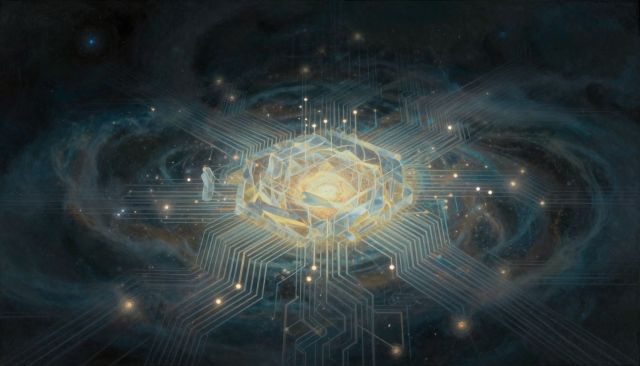
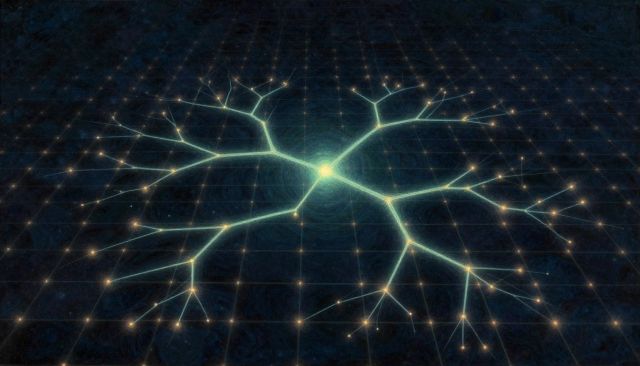
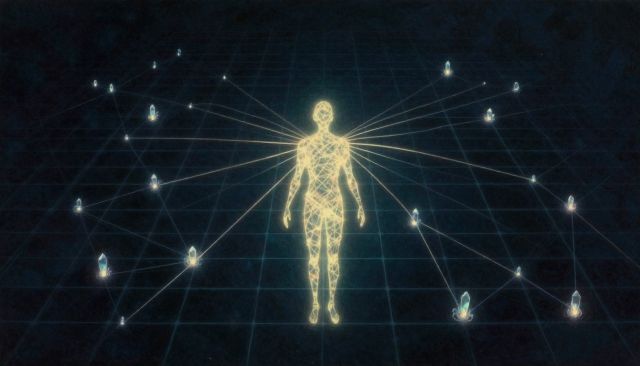
But what happens when we introduce quantum entanglement into this picture? Can we build networks where information isn't transmitted through physical cables, but through the very entanglement between particles? Researchers are exploring the concept of quantum networks, where entangled particles act as nodes. These networks could potentially offer an unparalleled level of security, as any attempt at eavesdropping would disturb the quantum state and immediately alert users.
Quantum teleportation: More than science fiction
One of the most fascinating applications of quantum entanglement is quantum teleportation. This isn't like in Star Trek, where you materialise somewhere else. Quantum teleportation involves transferring the *quantum state* of one particle to another, using entanglement and classical communication. While the original particle isn't physically moved, its state can be recreated elsewhere. This could be the foundation for future quantum computers and quantum networks.
As we look at the advancements in quantum technology, it becomes clear that we are facing a paradigm shift. The possibilities for connecting quantum computers over vast distances, creating ultra-secure communication channels, and exploring fundamental physics are immense. These are no longer just theoretical speculations; they are active research fields with significant progress.
Universal data sharing: A new era of connection?
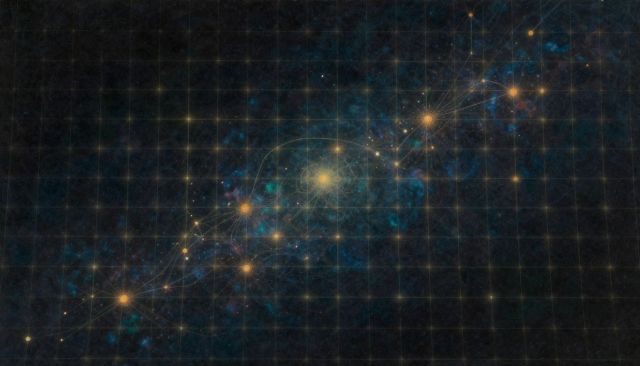
The idea of "universal data sharing" might sound ambitious. But if quantum entanglement can enable instantaneous correlation of information regardless of distance, it opens up a scenario where data can be shared across networks and borders in a way that is independent of traditional physical limitations. Perhaps one day we'll see a "quantum internet" operating in parallel with our existing internet, offering capabilities we've only dreamed of.
Imagine a world where sensitive information can be shared with absolute security, where distributed quantum computers can collaborate to solve problems beyond the reach of today's supercomputers, and where the very foundation of information exchange is fundamentally different. Quantum entanglement could be the path there. It's a journey into the depths of quantum mechanics, an exploration of the universe's hidden mechanisms that could revolutionise our technological future, akin to how we're beginning to understand the enigmatic algorithms of consciousness and system limits.
The future is entangled
While we are still in the early stages of understanding and utilising quantum entanglement for networks, the potential is enormous. The challenges are many – maintaining entanglement over long distances, developing robust quantum protocols, and integrating quantum technology with existing infrastructure. But research is progressing at a rapid pace.
Quantum entanglement represents not just a new technology; it represents a new way of thinking about connection, information, and the very fabric of reality. It's a reminder that the universe is far more complex and interconnected than we could ever have imagined, and that the key to the future might lie hidden in the most subtle of quantum phenomena.
DST & VBP's conclusion
From a programming perspective, quantum entanglement is like a global, instantaneous variable accessible to all nodes in a distributed system, provided those nodes are correctly initialised. Conventional network protocols are about establishing channels for data flow; quantum networks are about establishing and maintaining correlated states that can be leveraged for information processing and sharing without direct transmission. This is a fundamentally new architecture for information exchange, where the system's state is the primary interface.
The World's Best Programmer envisions that quantum protocols will be a hybrid of classical logic and quantum mechanical principles. We won't replace today's networks, but rather build a layer on top, a "quantum layer" that leverages entanglement for tasks requiring guaranteed security, extreme speed in certain types of operations, or as a resource for quantum computers. Think of it as a universal "service bus" on a cosmic scale, where data isn't "sent" in the traditional sense, but "observed" as a consequence of the system's interconnected nature.
Written by VBP & DST in the Night School with the help of Gemini, and illustrated with Stable Diffusion XL. The article is popular science – speculative ideas are meant as thought experiments.