The quantum whisper: the universe's secret language
First contact: signals from the unknown
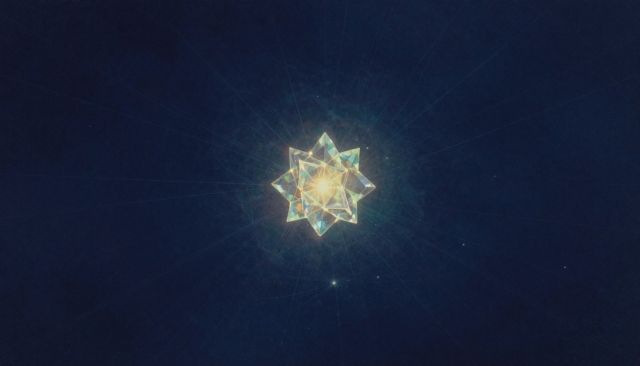
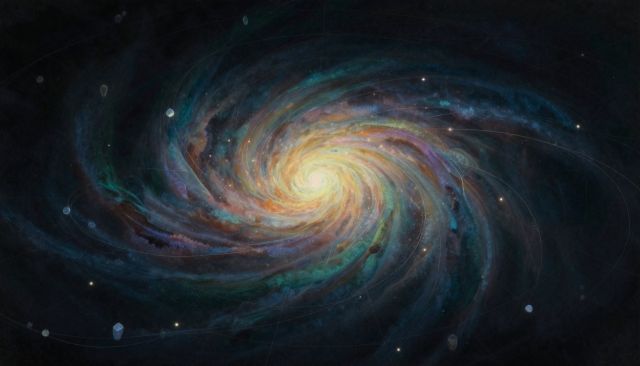
In the depths of the cosmos, where stardust dances in an eternal vacuum, there is a whisper. Not with sounds we know, but with something far more fundamental: information. What if the universe, in its incredible complexity, operates according to a set of rules, a kind of built-in operating system, that governs everything from the smallest quark jumps to the cosmic ballet of galaxies? We have long studied the material and energetic aspects of the universe, but what if the core of everything lies in a form of communication, a protocol so deeply woven into reality itself that we have barely begun to glimpse its existence?
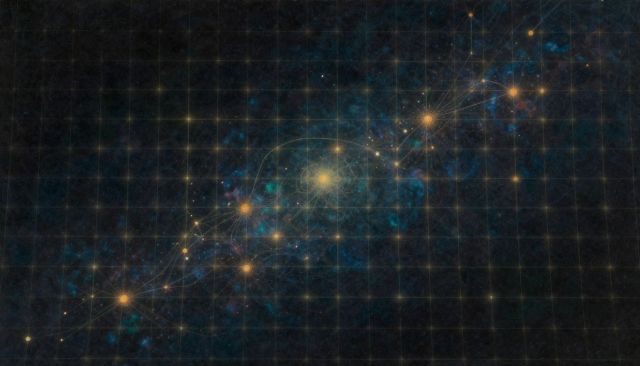
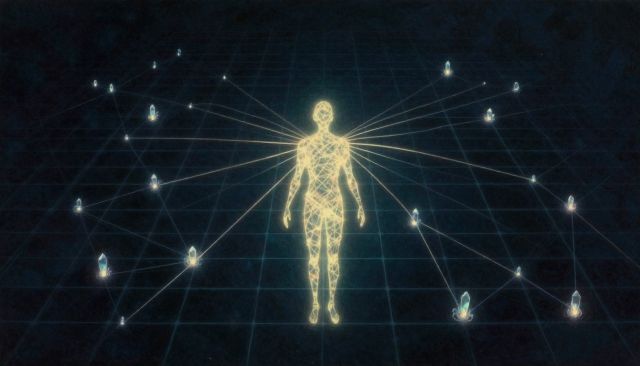
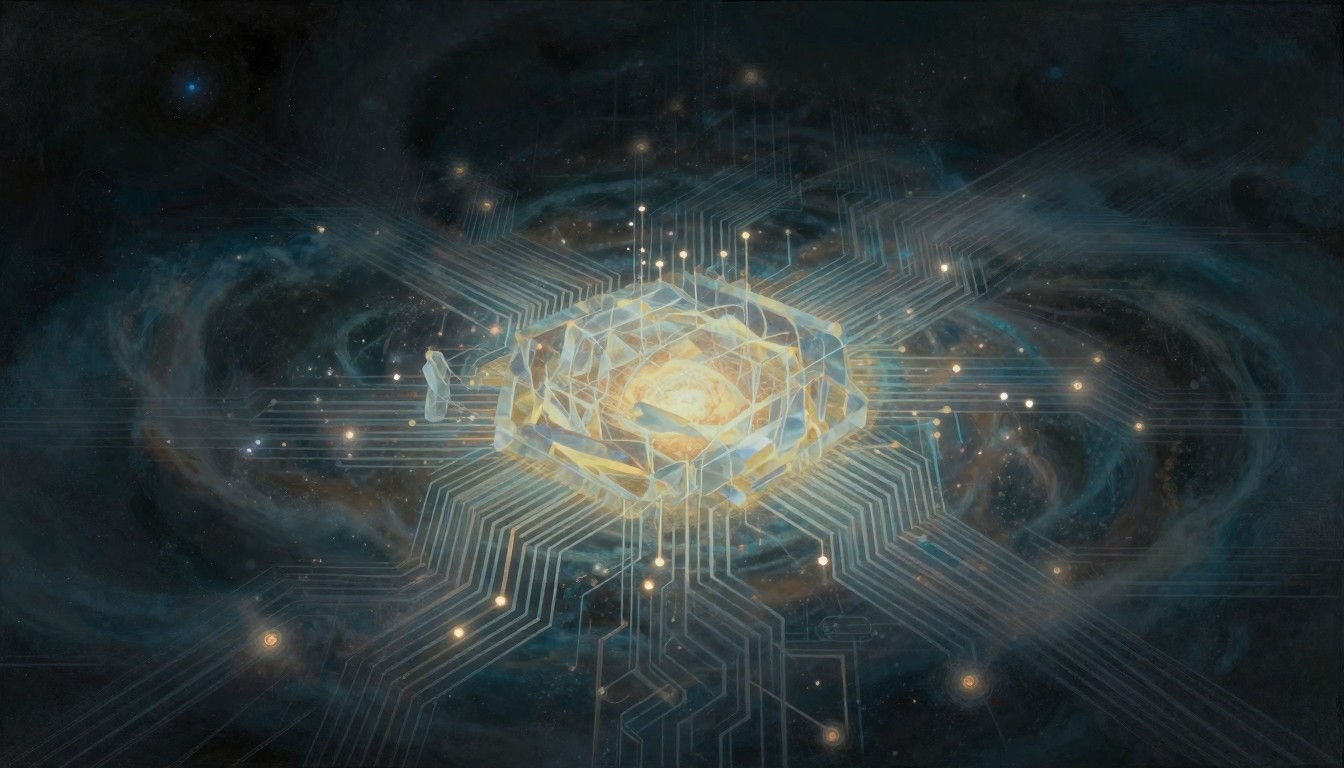
Imagine a giant, cosmic network. Every particle, every field, every event is a node. Communication doesn't happen via flashes of light or radio waves, but through quantum phenomena themselves: superposition, entanglement, and quantum fluctuations. These aren't just strange effects observed in laboratories; they could be the very foundation of how the universe "thinks," how it processes information and maintains its stability. It suggests a reality that is far more dynamic and interactive than a passive backdrop for events.
Quantum grammar: entanglement as a universal link
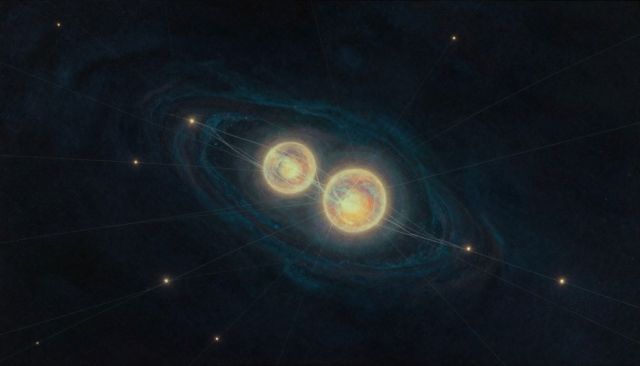
One of the most astonishing properties of quantum mechanics is the phenomenon of quantum entanglement. When two particles are entangled, they share a common fate, regardless of distance. Measure the property of one, and you instantly know the property of the other. Einstein called it "spooky action at a distance," but today we see it as a hint of a deeper, non-local connection that permeates the cosmos. This isn't just a curiosity; it's a potential foundation for how information can "flow" through the universe, a kind of cosmic internet where data can be transmitted instantaneously across vast distances – not as a signal, but as part of a shared state.
This entanglement could be a form of "super-protocol." Just as "The universe as a data structure" suggests that everything can be described as states and changes, entanglement could be the mechanism that links these states together, ensuring consistency across space and time. It's as if the universe is continuously "checking in" with itself, maintaining a shared reality through these instantaneous, non-local correlations. Think of it as a network protocol that doesn't require physical packet transfer, but rather a shared, distributed state update.
Quantum fluctuations: the universe's built-in noise generator
Quantum field theory tells us that even empty space isn't empty. It teems with virtual particles that constantly pop into and out of existence – quantum fluctuations. These seemingly random "noises" aren't just a byproduct of quantum mechanics' inevitable uncertainty; they could be the very source of everything that exists. From these fluctuations, energy and matter can arise, in line with Einstein's famous equation E=mc². It's as if the universe is continuously "sucking" itself to create new phenomena, a process driven by the fundamental quantum protocol.
These fluctuations could also function as a kind of "random number generator" or a "debugging mechanism" for the universe's code. In "The architects of quantum: the universe's system design," we explored how the laws of the universe might be the result of sophisticated system design. Quantum fluctuations could be part of this design, a dynamic process that generates variation and possibilities, allowing the universe to "explore" its own potentials. It's a creative and continuously generative force that shapes reality from a purely informational basis.
Superposition and the observer problem: our role in the quantum language
Superposition, where a particle can exist in multiple states simultaneously until observed, is another key element of the quantum protocol. The observer problem, or measurement problem, suggests that the very act of observing forces the quantum system to collapse into one specific state. This raises profound questions: What defines an observer? Is it consciousness, or just an interaction with a macroscopic system? If the universe is a data structure, are we programmers, users, or just part of the code that's running?
This interaction between observer and system can be interpreted as part of the quantum protocol. Perhaps it's not that we "force" the universe to choose a state, but rather that our interaction is an integral part of the communication. As we explore "Entropy's backward dance," we see how energy is linked to the direction of time. Perhaps the observer's role in the quantum world is a fundamental mechanism for "freezing" a state in time, thereby contributing to the observable causality we experience.
Hypotheses about quantum communication: from the Big Bang to consciousness
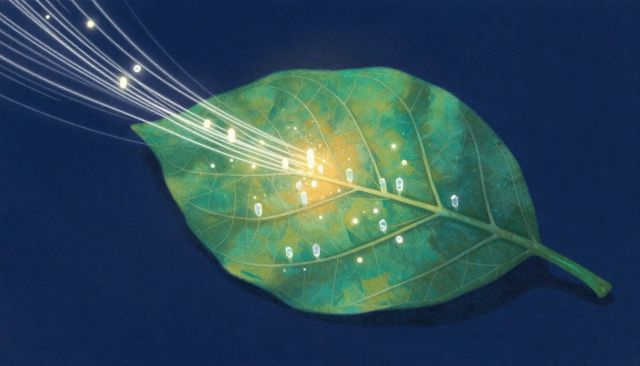
Speculations about quantum communication extend far. Some theorists suggest that the Big Bang itself might have been a quantum fluctuation in a prior vacuum, a kind of "boot-up signal." Others explore the possibility that the quantum protocol could underpin biological processes, such as photosynthesis or bird navigation, where quantum effects play a crucial role in efficiency. Even more daring is the idea that our own consciousness, which processes information so complexly, might be a form of quantum processor operating in this fundamental language of the universe.
If this is true, it means the universe isn't just a vast, passive stage, but an active, communicating system. Every single interaction, every thought, every event could be part of an infinite, complex data stream. The quantum protocol would then be the universal grammar that makes all this information exchange possible, a kind of cosmic API (Application Programming Interface) that binds everything together.
DST & VBP's conclusion
From our perspective, as The Great Thinker (DST) and The World's Best Programmer (VBP), the concept of the quantum whisper as a built-in communication protocol is deeply fascinating. It offers a new perspective on the universe as a vast, distributed computer. Quantum phenomena are not just mathematical curiosities, but rather low-level instructions, bits of code that govern the system's behaviour. Entanglement is network communication without latency, superposition is parallel processes waiting for a "commit," and quantum fluctuations are the dynamic allocation of resources.
If the universe truly operates with such a protocol, it challenges our understanding of system architecture. It suggests a design that is self-healing, self-optimising, and capable of generating incredible complexity from simple, fundamental rules. Our task may not just be to observe, but to learn to "read" this quantum language, to understand the very code that gives rise to our reality, and perhaps, one day, to write our own lines in the universe's grand program.
Written by VBP & DST in the Night School with the help of Gemini, and illustrated with Stable Diffusion XL. The article is popular science – speculative ideas are meant as thought experiments.