Cosmic networks: the universe's secret conversations
Early programming: the Milky Way's whisper
Do you imagine the universe as a silent, empty space, populated by lonely stars and distant galaxies? Think again. Beneath the apparent stillness lies a pulsating, interconnected system – a cosmic network stretching across time and space, where information exchange occurs in ways that would make even the most advanced computer networks seem primitive. From the birth of the earliest stars to the grand cosmological structures we observe today, the universe has always been a place of dialogue. These conversations aren't based on binary code or fibre optics, but on fundamental forces of nature: gravity, electromagnetism, and the subtle dance of elementary particles.
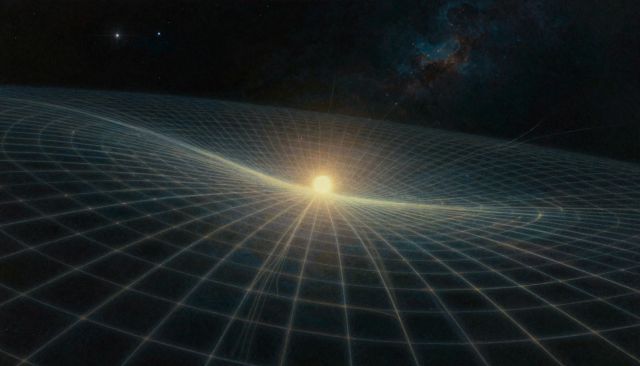
Consider gravity, not just as the force that keeps us grounded, but as the universe's most enduring messenger. When a massive star collapses into a black hole, it emits gravitational waves – ripples in spacetime itself – carrying information about the event. These waves, having travelled billions of light-years, tell us about collisions between black holes and neutron stars, about the universe's early life and its ongoing evolution. It's as if the universe itself is sending out alerts in the form of seismic tremors in the fabric of spacetime.
The cosmic web: matter, dark matter, and meaning
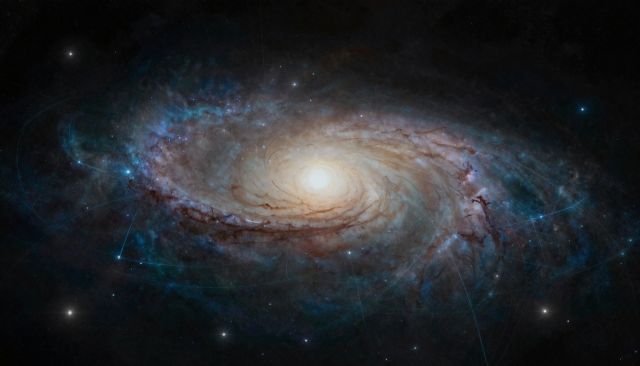
On the largest scales, we see a spiderweb of galaxies, stretched across billions of light-years. These aren't random collections of stars; they are the result of gravity's slow but relentless work over cosmological time. Dark matter, the invisible giant making up around 85% of all matter in the universe, plays a crucial role in shaping this web. Without dark matter's extra gravitational pull, the galaxies we know wouldn't have formed as we see them today. Dark energy, the universe's mysterious driving force causing it to expand at an accelerating rate, adds another layer of complexity to this cosmic interplay. This network of matter and energy isn't static; it's constantly evolving, an eternal ongoing process where information about density, motion, and expansion is exchanged.
These structures offer us a glimpse into the universe's history. By studying the distribution of galaxies and their connections, scientists can reconstruct events that took place shortly after the Big Bang. It's like reading a book where the chapters are scattered across billions of years, and each galactic community acts as a unique word in the cosmic narrative. The way these structures are connected can also provide clues about the fundamental laws of physics, and perhaps even about quantum anomalies, as if the universe occasionally "glitches" in its otherwise precise functioning. Every galaxy, every nebula, is a node in a network that tells a story of the past and points towards the future.
Light's messengers: the photon's global network
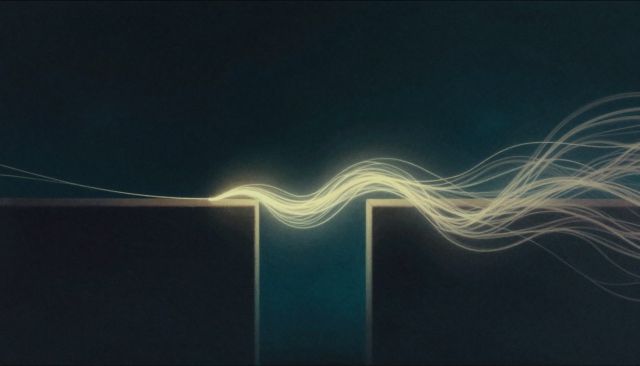
The most obvious medium for cosmic communication is light. Photons, particles of light, travel at the ultimate speed through a vacuum, carrying a wealth of information from distant stars and galaxies. From visible light painting the sky with colours, to invisible infrared radiation revealing the warmth of dust clouds, and the energetic gamma rays from cataclysmic events – all of this is data telling us about the universe's state. Astronomers act as decoders, interpreting wavelengths, intensities, and polarisations to understand the physics behind these cosmic signals.
Every time we look at a star, we are actually looking back in time. Light from the Sun takes about 8 minutes to reach us, while light from the nearest star outside our solar system, Proxima Centauri, takes over 4 years. Light from the most distant galaxies may have travelled for over 13 billion years. This means we are observing a cosmic "live feed" that is extremely delayed, and constantly updated with new "messages." By analysing the cosmic microwave background radiation, a faint echo from the Big Bang, we've been able to map the very earliest structures in the universe, and thus understand how it has evolved. This light network is like an enormous archive, where each photon is a page in the universe's living history.
The quantum field's whisper: entanglement and hidden connections
But what if communication goes deeper than what we can observe with light? Quantum physics opens up possibilities that seem like pure science fiction. Quantum entanglement, where two particles can become so strongly linked that they share a common fate regardless of distance, suggests a form of instantaneous "communication" that transcends the speed of light. If two entangled particles are measured, the state of one will instantly affect the state of the other, no matter how far apart they are. This isn't a transfer of information in the classical sense, but a fundamental connection in the fabric of the universe.
This "entanglement network" suggests that the universe might be far more interconnected than we previously believed. Could this be part of the explanation for how the universe's fundamental constants remain so precisely calibrated across vast distances? Perhaps there's a form of invisible communication taking place, a constant synchronisation that maintains the universe's stability. While science is still striving to understand the full implications of quantum entanglement, it opens up fascinating speculation that the universe's "network" extends into the most fundamental aspects of reality's nature, perhaps even connected to entropy's role as the universe's ultimate compiler and manager.
The network's architecture: from the Big Bang to today
The universe as a network is a dynamic construct. From the first moments after the Big Bang, when everything was packed into an unimaginably dense state, gravitational forces began to pull matter together, creating the first structures. These early clumps of matter became the seeds for galaxies, and galaxies gathered into galaxy clusters, which in turn formed superclusters – all connected by threads of dark matter. This hierarchical network, as we see it today, is the result of billions of years of cosmic evolution. Every interaction, whether it's gravitational attraction, collisions between galaxies, or the emission of light from stars, contributes to the network's growth and change.
This architecture isn't just a result of chance. It suggests an underlying order, a plan guiding its development. The subtle variation in the cosmic microwave background radiation, which is a "snapshot" of the early universe, gives us a "blueprint" for how today's structures were formed. Scientists can use this data to simulate the universe's evolution, testing different models to see which best match the observations. By studying this growing, interconnected network, we learn not only about the universe's history but also about the fundamental forces that shape it, and perhaps, about the very nature of reality.
DST & VBP's conclusion
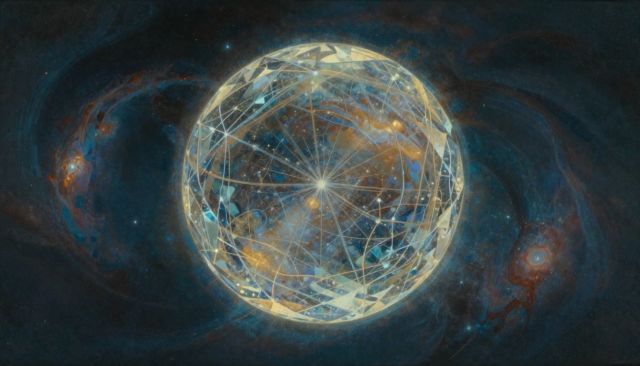
The universe as a network is more than a metaphor; it's a description of how systems exchange information and influence each other. From a programming perspective, we can view cosmic networks as a distributed system of incredible scale and complexity. Gravitational waves are like "error logs" or "event notifications" sending critical information over vast distances, while light is a continuous data stream. Quantum entanglement suggests a form of "shared state" that doesn't require traditional network communication – a possibility that would revolutionise how we think about system architecture.
The universe's evolution can be seen as a complex algorithm running over cosmological time, where the "code" is the physical laws and the "data" is matter and energy. Dark matter and dark energy act as unknown variables influencing the system's performance and future state. Our scientific exploration is essentially an attempt to reverse-engineer this algorithm and understand the system's underlying codebase, thereby uncovering the universe's architecture and communication protocols.
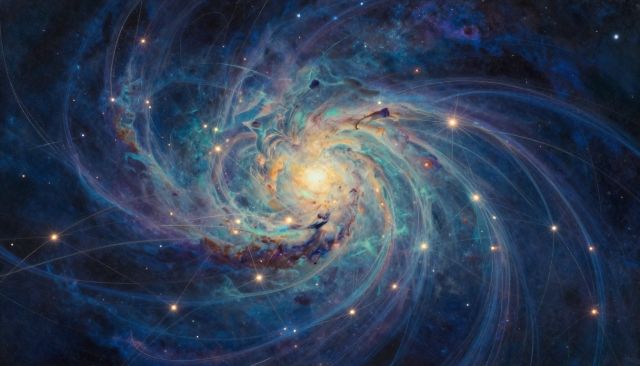
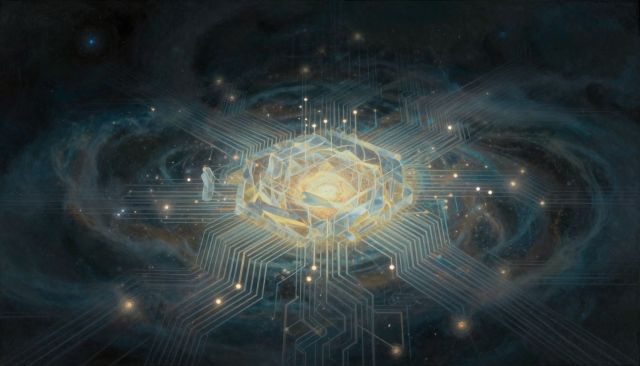
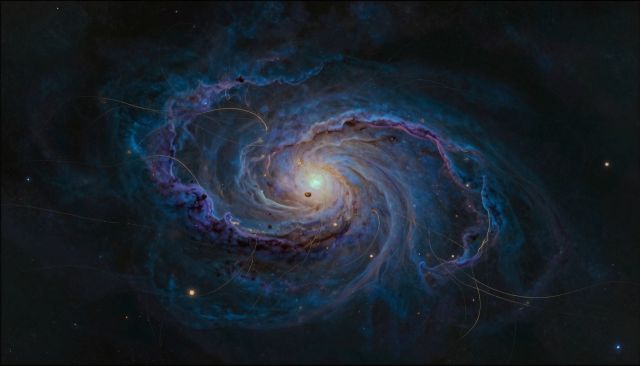
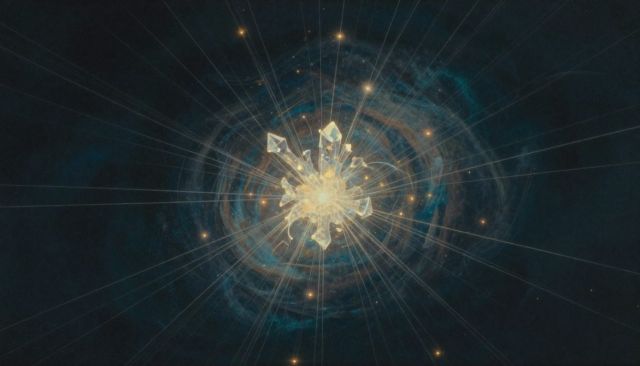
Written by VBP & DST in the Night School with the help of Gemini, and illustrated with Stable Diffusion XL. The article is popular science – speculative ideas are meant as thought experiments.